
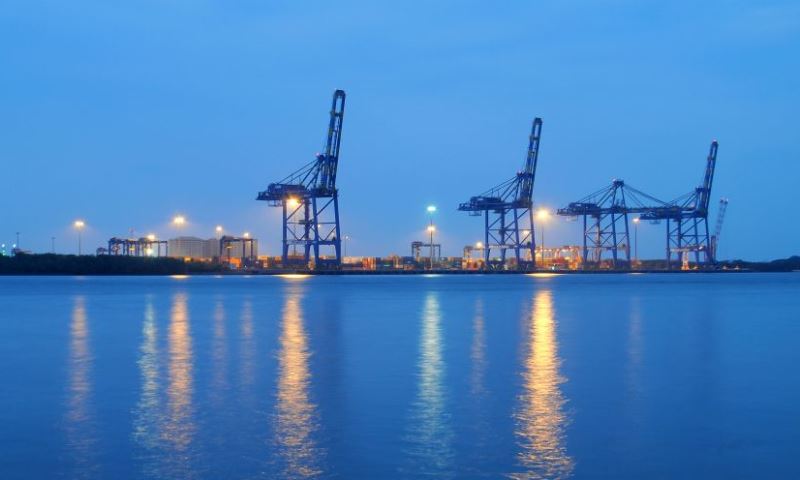
The shipping and logistics industry has sought urgent intervention from the Central and Kerala governments over the implementation of mandatory 100% container scanning at the International Container Transshipment Terminal (ICTT) at Vallarpadam, Kochi, amid disruptions to container movement.
The new scanning arrangement has triggered a standoff between trailer drivers and the authorities, with several drivers reportedly refusing to take their vehicles through the drive-in cargo scanner. The disruption, which began on November 9, has affected the movement of containers through the terminal gates and created delays in port operations.
Trailer crew members have raised concerns about potential health risks associated with repeatedly passing through the scanning facility. Drivers reportedly need to cross the scanner several times a day, prompting concerns over their exposure and the adequacy of safety arrangements.
The disruption has affected export-import cargo movement, with container trailers facing delays and queues building up along the road connecting the terminal. The situation has also raised concerns among exporters, importers, shipping lines and logistics service providers over additional costs arising from delayed cargo clearance, detention and demurrage.
The Cochin Chamber of Commerce and Industry has called for urgent intervention by Customs authorities to restore normal operations. Among the alternatives suggested by trade representatives are selective or risk-based scanning instead of compulsory scanning of every container, and the use of designated Container Freight Stations (CFSs) and Inland Container Depots (ICDs) for scanning and examination.
The industry is seeking a practical solution that addresses security requirements while ensuring the safety of transport workers and maintaining the smooth flow of cargo.
The issue assumes importance as Cochin Port’s Vallarpadam terminal serves as a key gateway for containerised trade in Kerala and neighbouring regions. A prolonged disruption could affect supply chains and increase logistics costs for businesses dependent on the port.