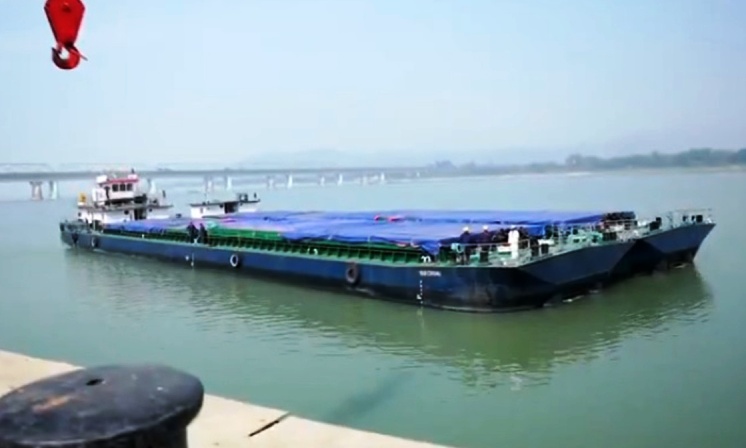
India’s inland waterways achieved a significant milestone with the maiden voyage of MV Trishul under the Jalvahak Scheme. The vessel, accompanied by the dumb barges Ajay and Dikshu, successfully transported 1,500 tonnes of cement from Kolkata via National Waterway 1 (Ganga) to Pandu in Assam, navigating the Indo-Bangladesh Protocol Route (IBPR).
This accomplishment underscores the growing adoption of waterways as a sustainable and cost-effective alternative to road and rail transportation.
The cargo journey continued on National Waterway 2 (Brahmaputra) after customs clearance at Dhubri on the India-Bangladesh border, leveraging enhanced infrastructure to facilitate seamless navigation.
This marks a step forward in India’s efforts to modernize logistics and promote eco-friendly trade routes.
To ensure uninterrupted year-round operations, the Inland Waterways Authority of India (IWAI) has partnered with dredging agencies to maintain navigability.
Dredging operations on critical stretches, including a 255-kilometer section of the Brahmaputra, are supported by five advanced cutter suction dredgers to address challenges during lean seasons.
The successful voyage of MV Trishul highlights the strategic potential of waterways in easing congestion on traditional transport networks, reducing environmental impact, and enhancing economic efficiency.
By utilizing the Indo-Bangladesh Protocol Route, this initiative also strengthens cross-border trade, fostering closer economic ties with neighboring countries.
The development reflects India’s commitment to leveraging its waterways for sustainable logistics, unlocking new opportunities for regional connectivity and economic integration while easing pressure on roadways and railways.
