
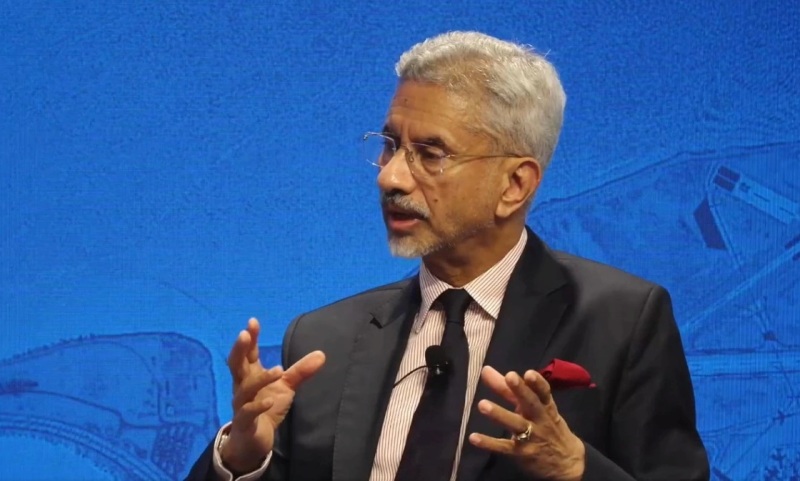
Emphasizing the critical need for stability in the Indian Ocean region amidst growing tensions in West Asia and the Indo-Pacific, External Affairs Minister S. Jaishankar underlined the importance of honoring agreements and fostering maritime cooperation. Speaking at the Eighth Indian Ocean Conference in Muscat on Saturday, Jaishankar elaborated on India’s significant contributions to regional maritime security, connectivity, and development.
In his keynote address, Jaishankar stressed that the Indian Ocean serves as a global lifeline, bringing nations together to achieve shared aspirations in development, security, and connectivity. Reflecting on India’s role, he highlighted how the country has consistently been a dependable partner during challenging times, including the COVID-19 pandemic, global food and fuel shortages, and economic crises.
Sharing his remarks on X, Jaishankar outlined India’s multifaceted efforts in the region. These include promoting land and sea connectivity through initiatives like the India-Middle East-Europe Corridor (IMEC), the India-Myanmar-Thailand Trilateral Highway (IMTT), and the International North-South Transport Corridor (INSTC). He also underscored India’s commitment to being a first responder during conflicts and disasters, enhancing maritime safety through coastal surveillance radars, and strengthening ties via White Shipping agreements.
Jaishankar highlighted India’s proactive stance in combating piracy and ensuring maritime contingencies are effectively managed through interoperability with regional partners. The deployment of naval forces during crises, capacity-building efforts for the navies and coast guards of Indian Ocean nations, and the establishment of secure digital communications were also key points of his address.
Stressing the importance of inclusive collaboration, Jaishankar advocated bridging gaps between resident and non-resident powers, particularly with the Global South, while discouraging external influences with ‘alien agendas.’
He reaffirmed India’s support for regional institutions such as the Indian Ocean Rim Association (IORA), Bay of Bengal Initiative for Multi-Sectoral Technical and Economic Cooperation (BIMSTEC), Indian Ocean Naval Symposium (IONS), Colombo Security Conclave (CSC), Indo-Pacific Oceans Initiative (IPOI), and the Indian Ocean Conference itself.