
Pipavav Port has been selected as one of only three pilot ports in India for the phased implementation of the Government of India’s 100% Non-Intrusive Inspection (NII) programme for import containers, marking a significant step towards technology-driven customs modernisation and trade facilitation.
Announced as part of the Union Budget 2026–27, the initiative aims to progressively expand container scanning using advanced imaging systems and AI-enabled risk assessment to enhance cargo security while expediting customs clearance and improving supply chain efficiency.
Under the pilot programme, Pipavav Port will work closely with the Central Board of Indirect Taxes and Customs (CBIC) and Customs authorities to assess the operational readiness required for nationwide implementation. The pilot will evaluate key aspects such as infrastructure, scanning capacity, operational workflows, logistics integration, and technology deployment, with the findings expected to help shape the future rollout of the programme across Indian ports.
Pipavav Port’s selection reflects its strong track record of pioneering infrastructure and operational innovations in the country’s maritime sector. The port was India’s first private port developed under the Public-Private Partnership (PPP) model, the first rail PPP project, and the first Indian port to operate double-stack container trains. Its strategic location, seamless multimodal connectivity, direct access to the Western Dedicated Freight Corridor (DFC), and modern container handling infrastructure make it well-positioned to support the initiative.
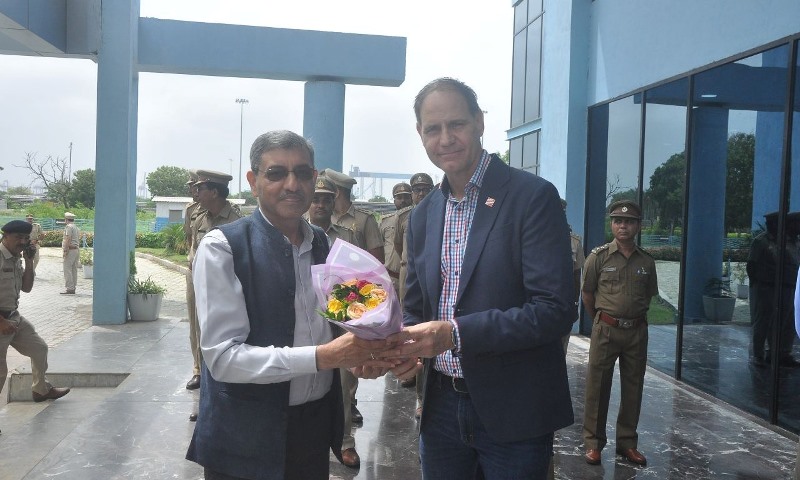
A high-level CBIC delegation led by Mohan Kumar Singh, Member (IT & Technology), CBIC, recently visited Pipavav Port to review the existing infrastructure, evaluate operational capabilities, and discuss the implementation strategy for the pilot project. The delegation also toured the port’s container terminals and scanning facilities to gain first-hand insight into its logistics operations.
The introduction of 100% Non-Intrusive Inspection is expected to create smarter, more secure, and predictable supply chains while reducing physical inspections and enhancing the ease of doing business. The initiative aligns with the Government of India’s vision of building a digitally enabled, globally competitive trade ecosystem through advanced customs technology.
Pipavav Port stated that it is committed to supporting CBIC and Customs authorities in the successful implementation of the pilot programme and contributing to the future nationwide deployment of technology-enabled cargo inspection across India’s port ecosystem.