
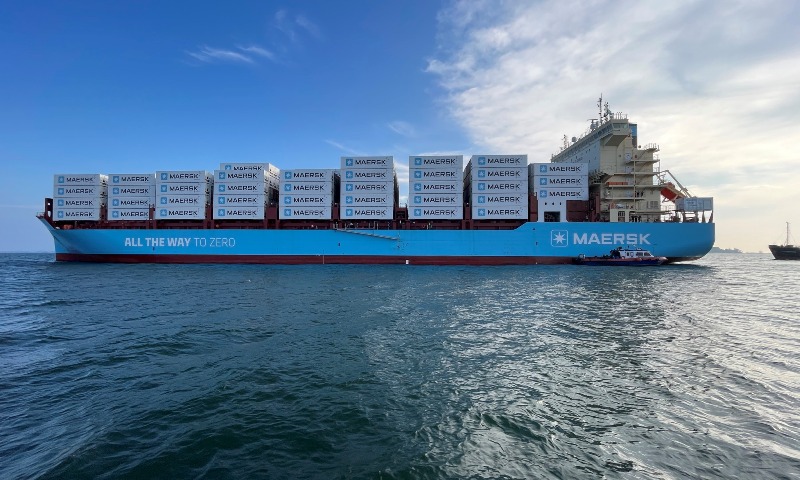
The rapid expansion of the global containership fleet is expected to place increasing pressure on port infrastructure worldwide, as a growing wave of newbuildings, dominated by ultra-large containerships (ULCs) of more than 15,000 TEU, enters service.
According to an analysis published by Lloyd’s List on November 10, 2026, the swelling orderbook is creating a growing mismatch between the capacity of new vessels and the ability of ports and container terminals to accommodate them.
The challenge extends beyond the risk of excess shipping capacity. The increasing deployment of mega containerships will require ports to invest in deeper berths, larger cranes, expanded terminal yards and improved landside connectivity to handle the growing size and concentration of vessel calls.
Mega Ships Could Intensify Port Congestion
The growing number of ultra-large containerships could also aggravate what the industry describes as ‘burst congestion’. When several large vessels arrive within a short period, terminals may struggle to handle the sudden concentration of cargo volumes.
Such disruptions can extend vessel waiting times, delay cargo operations and affect subsequent port calls, potentially spreading congestion across entire shipping networks.
The operational challenge is particularly significant for ports that lack sufficient infrastructure to accommodate vessels of this size or handle the substantial cargo volumes discharged during individual calls.
Developing Economies Face Greater Challenges
Ports across the Global South could be particularly vulnerable to the changing dynamics of the container shipping industry.
Terminals without adequate water depth, berth capacity, crane outreach and yard infrastructure risk being excluded from direct calls by ultra-large vessels. This could reinforce the concentration of mainline container services at a smaller number of large, well-equipped hub ports.
However, ports that invest in infrastructure upgrades, operational efficiency and multimodal connectivity could position themselves to attract larger vessels and strengthen their role in global shipping networks.
Infrastructure Investment Becomes Critical
The accelerating delivery of mega containerships highlights the need for closer coordination between shipping lines, shipbuilders, port authorities and terminal operators.
For the port sector, the challenge will be to ensure that infrastructure development keeps pace with fleet expansion while improving cargo-handling efficiency and managing operational disruptions.
The growing size of container vessels is therefore emerging as an important consideration in future port planning, particularly for developing maritime economies seeking to strengthen their participation in international trade.
Source: Lloyd’s List, November 10, 2026.