
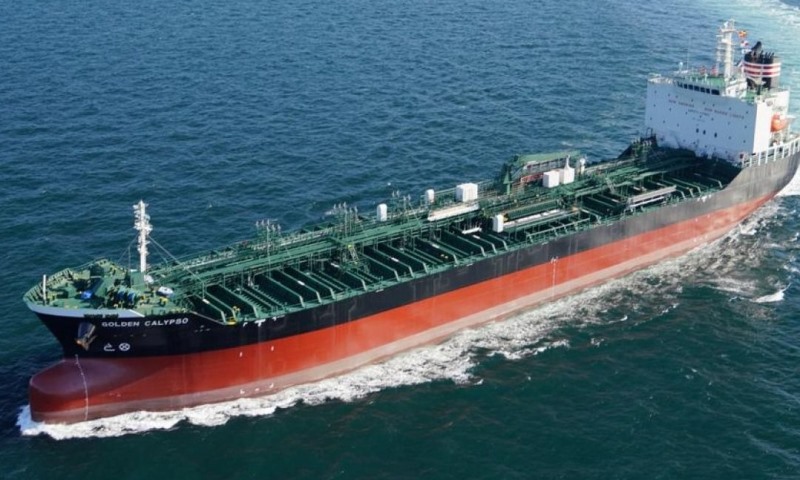
Global dry bulk ship recycling declined by 36% year-on-year to just 3 million deadweight tonnes (DWT) between January and October 2026, marking its lowest level in 18 years, according to BIMCO. Only 70 dry bulk vessels were recycled during the ten months, with most coming from the smaller handysize and supramax segments.
Strong freight rates have continued to encourage shipowners to keep older vessels in operation, delaying their retirement and limiting recycling activity. Filipe Gouveia, Shipping Analysis Manager at BIMCO, said prolonged favourable market conditions had significantly extended the operational lives of older bulk carriers.
Dry bulk recycling has remained subdued since 2021, supported by several factors that have tightened the shipping market’s supply-demand balance. These include severe port congestion, longer sailing distances following sanctions on Russian coal, vessel diversions away from the Red Sea and increased cargo flows from the Atlantic to Asia.
More recently, strong investment in artificial intelligence (AI) has boosted electricity demand, coal consumption and global economic growth, helping the dry bulk market withstand challenges arising from changes in US trade policy and disruptions in the Strait of Hormuz.
Growing Backlog of Ageing Vessels
The prolonged period of low recycling activity has created a substantial backlog of older vessels in the global dry bulk fleet. BIMCO estimates that an additional 856 ships, representing 61 million DWT, would have been recycled if vessel lifecycles had followed the patterns observed between 2000 and 2019. This is equivalent to approximately 6% of the current fleet capacity.
As a result, the average age of dry bulk carriers has increased to more than 13 years, compared with around 10 years at the beginning of the decade.
The ageing fleet profile is becoming increasingly evident, with 1,035 dry bulk vessels totalling 46.7 million DWT now more than 25 years old. These vessels account for 7% of the total number of ships and 4% of fleet capacity.
The proportion of older capacity is highest in the handysize and panamax segments, at 8% each, compared with 5% for supramax vessels. The capesize segment has a considerably smaller ageing fleet, with only 11 vessels exceeding 25 years of age, reflecting the typically shorter operational lifecycles of larger bulk carriers.
Recycling Expected to Increase in 2027 and 2028
Looking ahead, BIMCO expects the dry bulk shipping market’s supply-demand balance to gradually weaken in 2027 and 2028, although from a relatively strong starting position.
Ship deliveries are forecast to accelerate, increasing by 19% in 2027 and a further 4% in 2028. The capesize segment is expected to drive much of this expansion, following stronger contracting activity in recent years.
A gradual softening in freight rates could make it less economically attractive for owners to continue operating older vessels, potentially triggering an increase in recycling activity.
BIMCO estimates that dry bulk ship recycling could rise to 5.5 million DWT in 2027 and 9.2 million DWT in 2028, which would represent the highest annual levels since 2020.
However, even with the projected increase, recycling activity is expected to remain relatively low compared with the peaks recorded during the 2010s. Consequently, a significant backlog of ageing vessels is likely to remain in the global dry bulk fleet.
The developments point to a potential shift in the dry bulk shipping market, as increasing fleet deliveries and moderating freight rates could gradually bring older vessels back into the ship recycling market.