
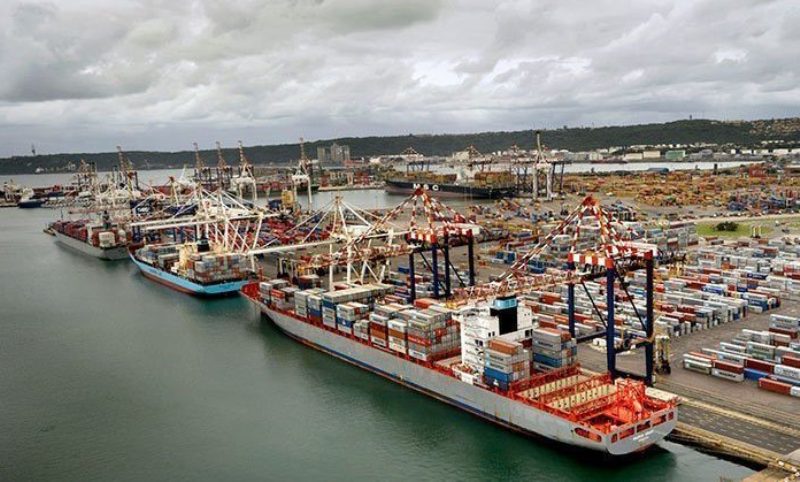
South Africa’s state-owned logistics group Transnet has announced a series of urgent measures to ease congestion and clear cargo backlogs at the Port of Durban, working alongside Durban Gateway Terminal (DGT) and other port and rail divisions.
The interventions aim to increase available berthing capacity, accelerate vessel operations, improve cargo evacuation and restore the smooth flow of containers through one of South Africa’s most important trade gateways. The congestion has affected shipping lines, cargo owners and the wider logistics chain, with some vessels reportedly waiting up to 20 days to discharge containers.
A key measure involves the immediate allocation of Berth 102 by Transnet National Ports Authority (TNPA) to accommodate geared vessels capable of handling cargo using their own cranes. Shipping lines are being encouraged to use the additional berthing facility.
Transnet is also facilitating the diversion of suitable vessels to the Ngqura Container Terminal (NCT) in the Eastern Cape. Durban-bound containers discharged at Ngqura can subsequently be transferred aboard smaller geared vessels to Berth 102 and the Point Terminal in Durban. Transnet Port Terminals (TPT) and DGT are coordinating the identification of vessels suitable for this arrangement.
Crane availability and rail evacuation
Additional capacity is expected from the return of refurbished ship-to-shore (STS) cranes at TPT’s Pier 1. The final crane is scheduled for commissioning on November 20 and handover to operations on November 21, bringing all six cranes into operational availability.
Transnet has also examined the possibility of transferring handling equipment from other terminals to DGT. However, its Cape Town container facilities cannot release comparable equipment because of the ongoing peak deciduous fruit export season.
On the landside, Transnet Freight Rail (TFR) has made trains available to transport imported containers destined for Gauteng. The company is encouraging cargo owners and logistics operators to use the rail services to accelerate container evacuation and reduce pressure on terminal storage and road transport operations.
Essential cargo, including pharmaceuticals and automotive parts, will receive priority handling before vessel berthing to facilitate faster discharge and evacuation.
Coordinated recovery plan
Transnet said resolving the backlog would require sustained implementation and close coordination among terminal operations, TNPA, TFR, shipping lines, customers and other stakeholders.
The company is coordinating and monitoring the interventions at senior leadership level and has committed to providing regular updates as the recovery measures progress.
The effectiveness of the additional berth capacity, vessel diversions, restored crane availability and increased rail evacuation will be crucial in reducing delays and improving operational performance at Durban, a major gateway for South African imports and exports.