
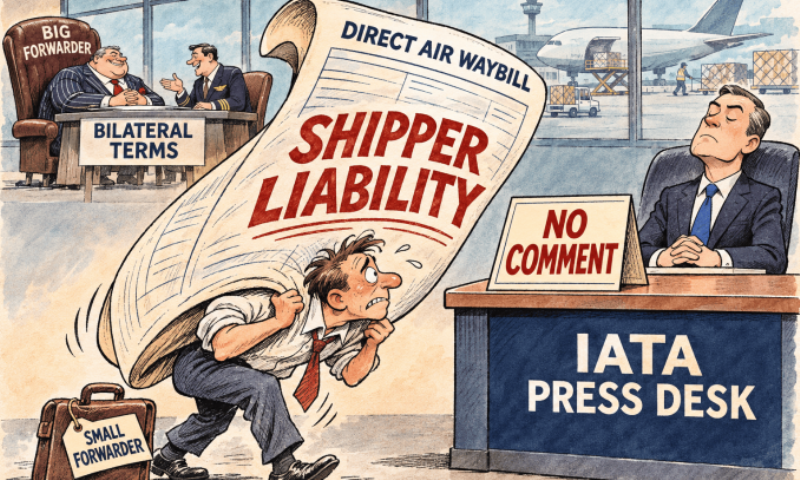
Smaller freight forwarders are facing difficulties in negotiating alternative contractual terms with airlines under the revised International Air Transport Association (IATA) Direct Air Waybill (DAWB) framework, raising concerns over liability, insurance coverage and competitive disadvantages in the global air cargo industry.
The revised framework, which came into effect on July 1, 2026, changes the allocation of responsibilities between airlines, freight forwarders and shippers. Under the new provisions, a freight forwarder acting as an agent for a shipper named on the airline’s air waybill may assume shipper-related obligations and liabilities unless alternative bilateral terms are agreed with the carrier.
According to the Airforwarders Association (AfA), some airlines have agreed to alternative liability arrangements with larger freight forwarding companies. However, smaller and mid-sized operators often lack the bargaining power and resources required to negotiate similar agreements with multiple airlines.
AfA chief executive Steve Smith has warned that smaller forwarders are left with limited choices when an airline refuses to negotiate. They must either accept the default contractual conditions or move their shipments to another carrier.
The association has also raised concerns over inconsistent contractual arrangements across airlines, which could create additional administrative and operational challenges for forwarders handling shipments through multiple carriers.
The revised provisions could expose forwarders to greater responsibility for issues such as incorrect cargo declarations, concealed dangerous goods and packaging failures, even in situations where they have limited control over the preparation of the goods.
The Airforwarders Association and the National Customs Brokers and Forwarders Association of America have published a joint white paper calling for changes to the framework. Industry associations from Australia and Canada have also supported the concerns.
The organisations are urging IATA to ensure that liability remains aligned with the responsibilities and operational control exercised by each party in the air cargo supply chain. They have also called for a consistent approach across airlines rather than requiring forwarders to negotiate separate arrangements with individual carriers.
The issue has wider implications for the air freight industry, particularly smaller logistics companies that operate on limited margins and may find it difficult to absorb additional legal, insurance and compliance costs.
Industry representatives are seeking a comprehensive review of the framework to establish a more balanced and commercially workable system for airlines, freight forwarders and shippers.