
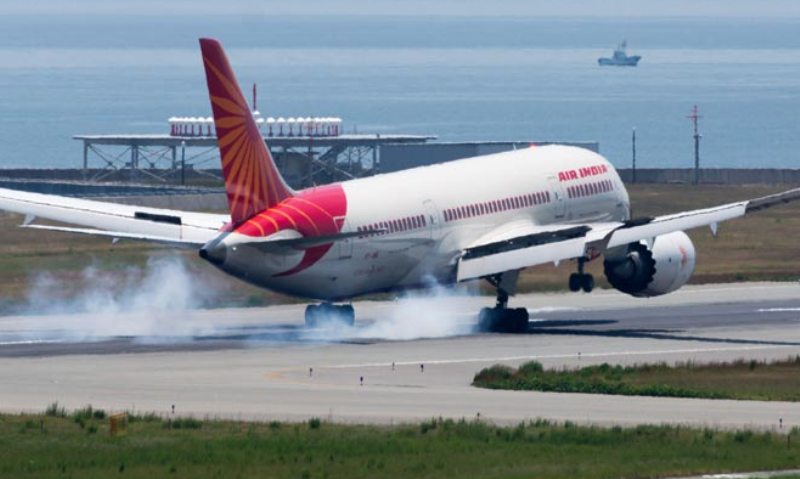
Air India has operationalised the Government of India’s new cargo transshipment framework through a Proof of Concept (PoC) on the Chennai–Delhi–Frankfurt cargo corridor, improving cargo handling efficiency and reducing transit delays.
Launched on 20 June 2026 with authorisation from the Bureau of Civil Aviation Security (BCAS), the initiative allows eligible shipments to remain securely packed in the same Unit Load Device (ULD) during transit, eliminating the need for piece-level security re-screening at Delhi Airport, subject to prescribed security controls.
During the first two months of the pilot, average cargo volumes on the Chennai–Delhi–Frankfurt corridor increased from 2.2 metric tonnes to 4.5 metric tonnes per day. Between 20 June and 20 August 2026, approximately 300 metric tonnes of cargo moved from Chennai to Frankfurt via Delhi.
The average cargo connection time at Delhi Airport declined significantly from 36–48 hours to 5–8 hours, while Flown-as-Booked (FAB) performance improved from 76% to 100%. Air India also reported no cargo loss or damage during the period.
Following approval to expand the pilot, Air India will facilitate eligible cargo shipments originating from Ahmedabad, Bengaluru, Chennai, Hyderabad and Mumbai through Delhi, with onward connections to Copenhagen, Frankfurt and London Heathrow.
P. Balaji, Group Head – Governance, Risk, Compliance & Corporate Affairs, Air India, said the initiative could strengthen India’s cargo and logistics infrastructure by streamlining cargo transfers and enhancing the role of Indian airports in international transit movements.
Ramesh Mamidala, Head of Cargo, Air India, said the framework could attract additional transit cargo through Delhi while improving aircraft belly utilisation. He added that the benefits could extend to freight forwarders, e-commerce companies, warehousing providers, ground handlers and other logistics stakeholders.
Under the earlier process, cargo transiting through Delhi often had to be unpacked, individually re-screened and rebuilt for onward transportation, increasing handling requirements and connection times. The new framework simplifies these operations by allowing eligible cargo to remain securely packed during transit.
Delhi is estimated to have the potential to attract more than 2 million metric tonnes of additional annual transshipment cargo across over 95 addressable international air cargo corridors.
Subject to regulatory approvals, the framework is expected to be progressively extended to domestic-to-international, international-to-domestic and international-to-international cargo movements through Indian airports, including narrowbody bulk cargo operations.
The initiative is expected to improve cargo connectivity, reduce transit times and strengthen India’s position in global air cargo and logistics networks.