
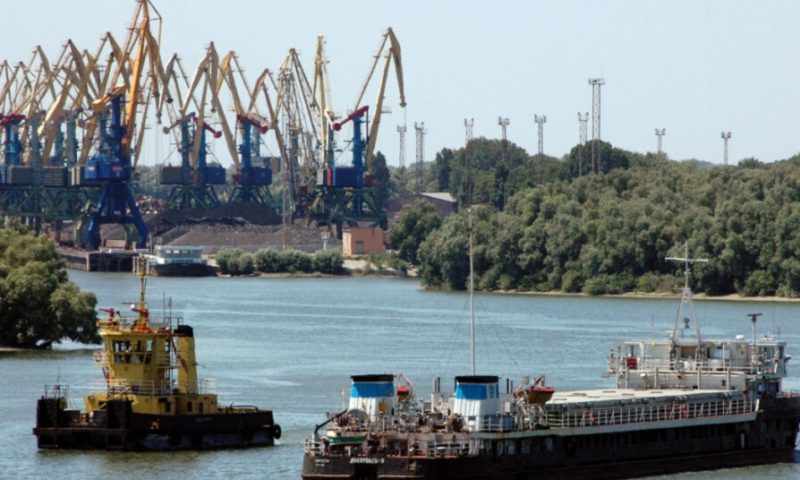
Terminales y Servicios S.A. is to build a new agro-industrial port at the town of Timbúes in the Argentinian province of Santa Fe.
This will require investment in the region of $550 million. Work commenced at the end of March this year. According to the company its construction will consolidate the area as “one of the largest agro-industrial export hubs in the world”.
It is located at the mouth of the Carcarañá River, which connects with the Paraná River. The land, all of which has already been acquired, has all the appropriate municipal and provincial authorizations as well as having the blessing of the central government.
The above mentioned investment encompasses construction of quays, storage silos and associated works. Once in operation, the port will handle fertilizer as well as shipments of grains and other value-added by-products.
Juan Manuel Ondarcuhu, owner of Terminales y Servicios S.A, highlighted the importance of the current economic and political environment as providing the impetus to go ahead with the the invest ment. A government representative also noted that, “On a unique scale in the country, this project consolidates Timbúes as one of the largest agro-industrial production and export clusters in the world.”
Terminales y Servicios Portuarios SA, already operates three ports in San Nicolás, San Pedro and Rosario, all in Argentina.