
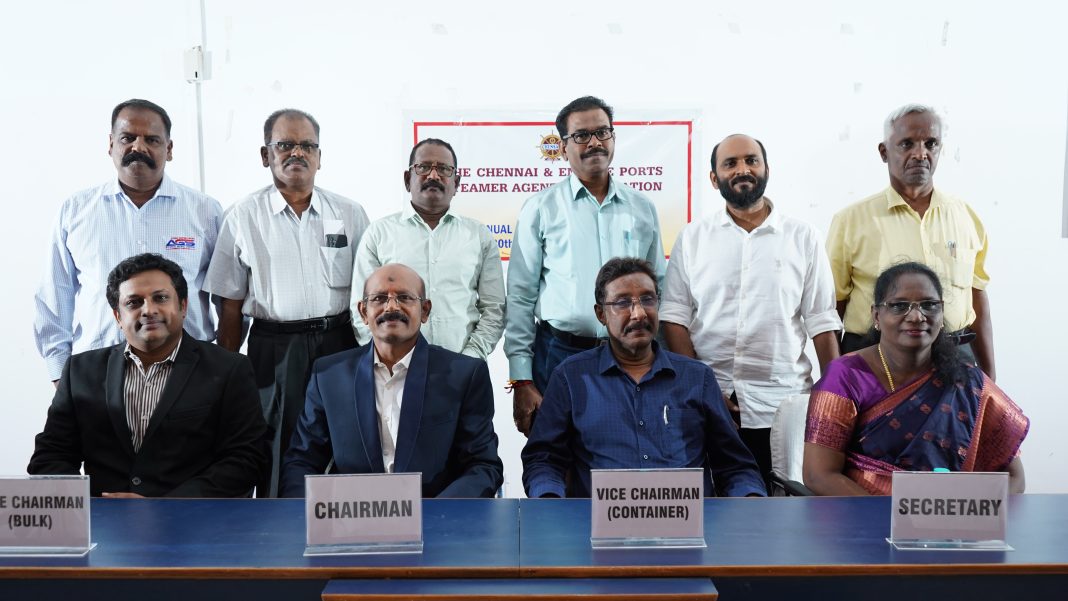
The Chennai & Ennore Ports Steamer Agents Association (CHENSAA) held its 69th Annual General Body Meeting (AGM) on 30 July 2026 at the Sea Farers Club, Chennai, where members discussed key industry challenges and proposed reforms aimed at improving trade facilitation, digital compliance, and cargo movement across Indian ports.
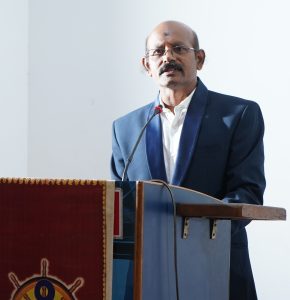 Chairman Y. Leeladharan said the issues deliberated during the AGM would be represented before the concerned authorities to facilitate smoother compliance procedures, enhance cargo volumes, and ensure seamless cargo movement. He reaffirmed CHENSAA’s commitment to contributing to the growth of India’s maritime and logistics sector.
Presenting the Association’s Annual Report for 2025–26, Mr. Leeladharan highlighted the initiatives undertaken by CHENSAA during the year and acknowledged the support of its members in achieving several important milestones.
He expressed gratitude to the Chairperson, Deputy Chairperson and officials of Chennai Port Authority, the Managing Director and officials of Kamarajar Port, the Chief Commissioner of Customs, Commissioners, DG Systems, CBIC, and Customs officials in Chennai for their continued guidance. He also thanked the management of CITPL, CCTL, Adani Ennore and Kattupalli Port terminals for their support to CHENSAA members.
The Chairman appreciated the Ministry of Ports, Shipping and Waterways, Indian Ports Association, National Shipping Board and DG Shipping for supporting the implementation of uniform port practices through the National Logistics Portal (NLP). He noted that the initiative is helping reduce duplication of documentation and hard-copy submissions under the “One Nation, One Port” digitalisation initiative.
Mr. Leeladharan also highlighted CHENSAA’s collaborative engagement with trade bodies including CCBA, NACFS, FIEO, Chambers of Commerce, CII, terminals, ports, Customs, Immigration, Port Health Officer and Mercantile Marine Department (MMD) to streamline operational procedures.
SCMTR implementation
Speaking on the implementation of the Sea Cargo Manifest and Transhipment Regulations (SCMTR), Mr. Leeladharan thanked CBIC for its prompt support in resolving technical issues faced by the trade during implementation.
However, he pointed out practical challenges faced by shipping agents, particularly at the first Indian port of call. He explained that while agents are required to file the Sea Arrival Manifest (SAM) covering both Sea Bill (SB) cargo and Freight Remaining on Board (FROB), complete Bills of Lading details are often unavailable due to documentation delays between exporters and importers. CHENSAA urged Customs to permit submission of cargo details without insisting on complete Bills of Lading information.
He further noted that in the case of non-containerised cargo such as dry bulk, liquid bulk and breakbulk vessels, different agents handle the same vessel at different ports. Since charterers and cargo owners are often unwilling to share Bills of Lading details with agents at subsequent ports, CHENSAA requested CBIC to reconsider the current compliance requirements, stating that imposing penalties would not resolve these practical operational issues.
The Association also recommended that the Government organise regular awareness and outreach programmes for the EXIM community to improve understanding of evolving regulations and compliance requirements.
Simplifying transshipment procedures
CHENSAA also sought simplification of documentation for sea-to-sea transshipment containers by dispensing with the Export Transshipment Permit (ETP) process.
According to the Association, the existing ETP requirement often delays documentation from origin ports, causing exporters to miss mother vessel connections at gateway ports and reducing India’s competitiveness against neighbouring foreign transshipment hubs. CHENSAA proposed allowing shipping lines to file manifests directly through ICEGATE without additional documentation at origin and gateway ports, thereby facilitating faster processing while enabling exporters to receive drawback and IGST refunds on time.
Immigration and port infrastructure
Mr. Leeladharan welcomed the Government’s initiative to expand the number of Integrated Check Post (ICP) locations with e-Business Visa facilities, describing it as a significant benefit for the maritime fraternity.
He also urged the Government to ensure that every operational port is equipped with an Integrated Check Post or appropriate immigration facilities to enable seamless Indian and foreign crew changes and facilitate visits by foreign nationals during vessel calls.
The AGM concluded with the participation of a large number of CHENSAA members, reaffirming the Association’s continued focus on policy advocacy and trade facilitation to strengthen India’s maritime logistics ecosystem.