
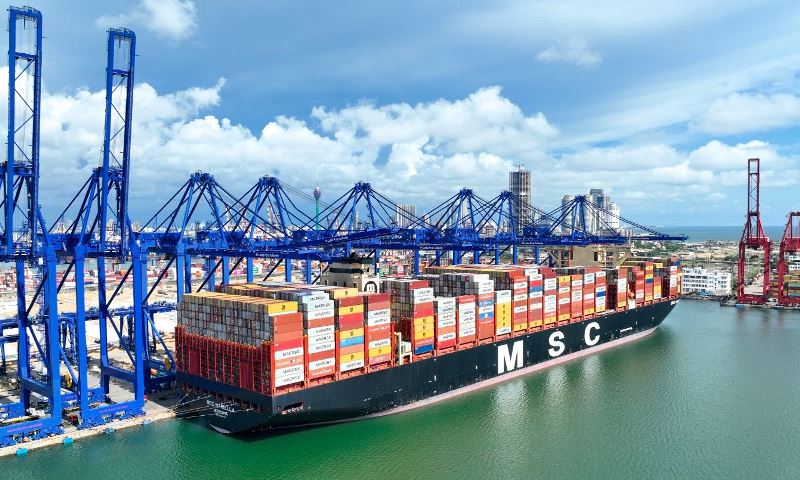
China Merchants Port Holdings has withdrawn from a proposed US$392 million logistics hub at Sri Lanka’s Colombo Port, creating uncertainty over the project’s future and potentially opening opportunities for Indian investors. The Sri Lanka Ports Authority (SLPA) is now seeking a new development approach for the proposed facility.
The South Asia Commercial and Logistics Hub was announced in 2023 as a major commercial and logistics development intended to strengthen Colombo Port’s warehousing and cargo-handling capabilities. Under the original arrangement, China Merchants was to hold a 70% stake, while the SLPA and Sri Lankan construction company Access Engineering would each hold 15%.
The partners have agreed to terminate the project agreements, citing changes in the implementation environment, project timelines and commercial considerations. As part of the settlement, the SLPA will pay approximately US$21.9 million to the project company, with the funds distributed according to the agreed arrangements.
The withdrawal does not mean China is leaving Sri Lanka’s port sector. China Merchants continues to have interests in other major maritime facilities in the country, including Colombo International Container Terminal and Hambantota Port.
For India, the development could create an opportunity to expand its commercial presence at one of the Indian Ocean’s most important transshipment hubs. Indian cargo accounts for a significant share of Colombo’s container traffic, making the port strategically important for India’s export-import supply chains.
India already has a presence through the Colombo West International Terminal, developed by Adani Ports in partnership with John Keells Holdings and the SLPA. The terminal’s planned capacity expansion to 3.2 million TEUs annually strengthens India-linked participation in Colombo’s container-handling infrastructure.
The SLPA is expected to pursue a new logistics hub through a public-private partnership and competitive bidding process. However, no Indian company has been confirmed as the replacement investor. Any opportunity for Indian businesses will depend on the proposed project’s commercial terms, investment requirements and Sri Lanka’s selection process.
The development marks a change in Colombo Port’s investment landscape, but its long-term implications will depend on how quickly Sri Lanka attracts a new investor and advances the logistics hub. For India, the project offers a potential commercial opportunity rather than a guaranteed strategic gain.