
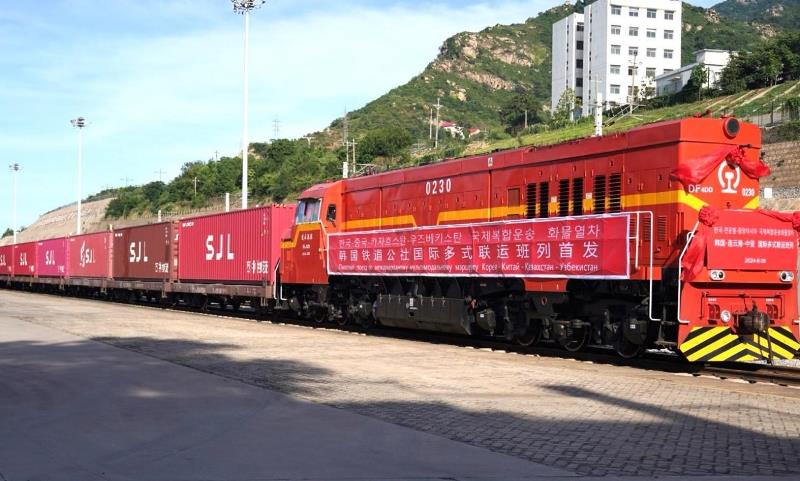
China has resumed direct freight rail services to Afghanistan, marking a step in enhancing trade links between the two nations. In October 31, a train loaded with 55 wagons of commercial goods departed from Nantong city in Jiangsu province, heading for Afghanistan’s northern Hairatan border in Balkh province. Yue Xiaoyong, China’s Special Representative for Afghanistan, shared the news on X, emphasizing the importance of this renewed connection.
Nantong, located north of Shanghai, is a central hub within China’s Belt and Road Initiative (BRI), which aims to facilitate trade and infrastructure development across Asia and beyond. The resumption of this rail route was celebrated with a formal ceremony in Nantong, attended by Yue and Bilal Karimi, the Afghan Ambassador to China, highlighting the diplomatic significance of the occasion.
This renewed rail connection comes shortly after China’s recent decision to lift customs tariffs on Afghan exports by the end of the year, a move that underscores the strengthening trade relationship between the two countries. With reduced trade barriers, Afghan products are expected to access the Chinese market more efficiently, fostering economic growth and providing new opportunities for Afghan businesses.
China’s commitment to economic engagement with Afghanistan through initiatives like the resumed rail service and tariff reductions demonstrates a focused effort to enhance regional cooperation and connectivity, benefiting both nations and promoting stability in the region.
In July, Chinese engineers, alongside Taliban officials, initiated work at Afghanistan’s Mes Aynak site—home to the world’s second-largest copper reserve—after a 16-year delay caused by prolonged conflict.
Situated approximately 40 kilometers (25 miles) southeast of Kabul, Mes Aynak is believed to hold around 11.5mn tonnes of copper ore. This vital resource, crucial for electronics production, has experienced increasing demand and rising prices in recent years.