
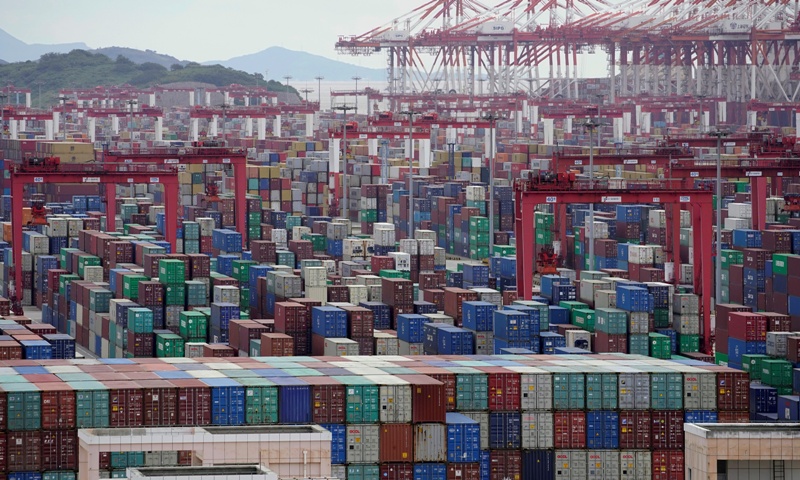
A new study from the International Council on Clean Transportation has investigated the feasibility of establishing green shipping corridors for China’s coastal shipping.
The researchers assessed whether the ships could be powered by renewable hydrogen, methanol, ammonia or batteries without the need to refuel en route. They concluded that the technological feasibility of applying renewable marine fuels on China’s coastal shipping routes is high, and three routes were identified as potential first mover candidates for green shipping corridors.
These routes were two interregional routes, Yangtze River Delta to Bo Sea and Pearl River Delta to Bo Sea, and one intraregional route in the Yangtze River Delta region. These regions are home to some of the world’s largest ports, including Tianjin, Shanghai, and Shenzhen, and, for example, container ships could use renewable marine fuels to sail a shipping corridor spanning 1,400 nautical miles from Tianjin to Shenzhen.
To enable the first zero-emission vessels on these routes, 6,000 tonnes of ammonia or methanol, or 900 tonnes of renewable hydrogen would need to be sourced. This would likely result in the need to supply 44-60 GWh of renewable electricity by 2030.
The estimated cost of renewable hydrogen at the pump is $7.60/kg by 2030, significantly higher than conventional marine fuels. Reducing costs by 32% by 2050 will require substantial policy support to make the corridors viable on a larger scale.
The researchers note that as of December 2023, there were 44 green shipping corridor initiatives globally, yet none have been fully commissioned, an indicator of the challenges of coordinating these corridors. “Compared with international routes, domestic routes could have the advantage of more stakeholder homogeneity. In some cases, a route could be operated by a single entity that owns the cargo as well as the vessels.”