
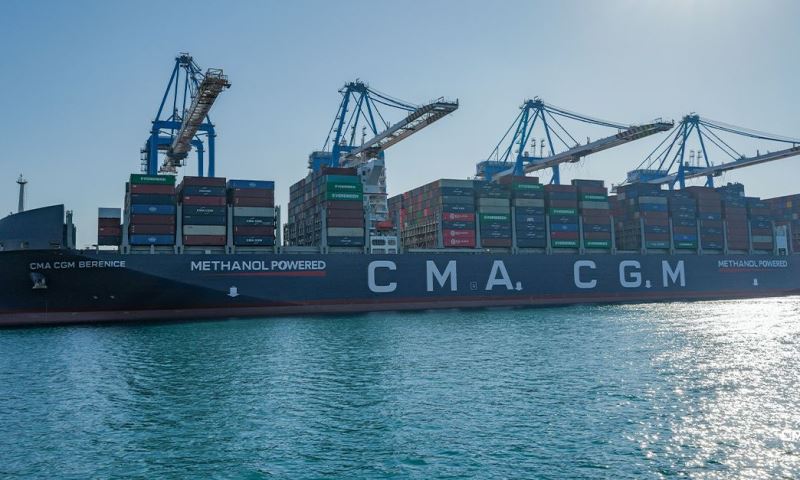
French shipping and logistics group CMA CGM reported a strong financial performance in the third quarter of 2026, with revenue increasing 31.1% year-on-year to US$18.4 billion, supported by higher freight rates and growing container volumes.
The group’s EBITDA climbed 61.6% to US$4.8 billion, compared with the same quarter last year, while its EBITDA margin improved to 25.9%, up 4.9 percentage points. Net profit more than tripled to US$2.32 billion from US$760 million a year earlier.
The shipping business remained the primary growth driver. Container volumes increased 5.5% to 6.5 million TEUs, outperforming the broader market. Maritime revenue rose 37.3% to US$12.3 billion, supported by a 30% increase in average revenue per TEU to US$1,891.
The shipping division generated EBITDA of US$4 billion, compared with US$2.2 billion in the third quarter of 2025. Its EBITDA margin improved to 32.4%, reflecting stronger freight rates and sustained demand for container transportation.
CMA CGM attributed the growth in cargo volumes to inventory restocking, increased investment in artificial intelligence infrastructure and data centres, and strong demand for clean technologies and electric vehicles, particularly in China.
However, the group’s logistics business delivered a mixed performance. Revenue increased 19.2% to US$5.46 billion, but EBITDA declined 14.4% to US$366 million. The EBITDA margin fell to 6.7%, reflecting challenging freight forwarding conditions and continued weakness in the automotive sector.
During the quarter, the group continued expanding its global shipping and terminal operations. It strengthened its fleet with new 24,000-TEU LNG-powered vessels and expanded its terminal presence through developments in Jeddah, Saudi Arabia, and Nador, Morocco.
Looking ahead, CMA CGM expects maritime demand to remain supportive in the coming months, with freight rates having strengthened since the second quarter. However, it cautioned that geopolitical tensions in the Middle East, disruptions to shipping routes, rising operating costs and changes in trade policies could create uncertainty.
The latest results underline the importance of the group’s maritime business in driving overall profitability, even as its logistics operations face margin pressures.