
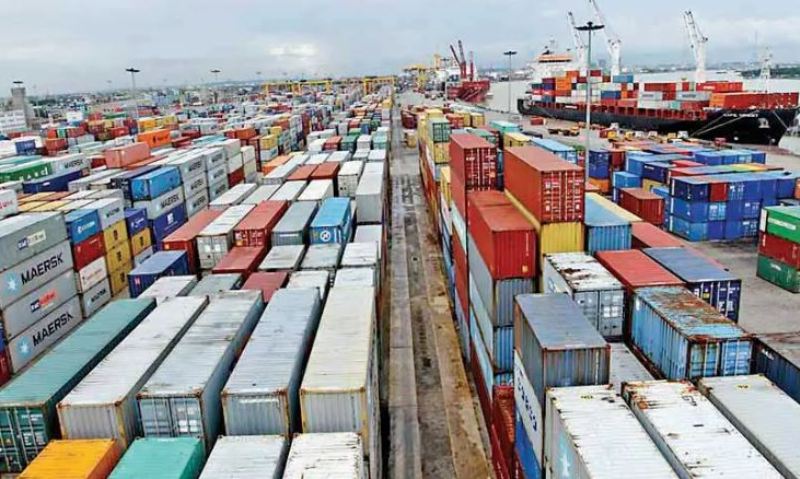
The ongoing turmoil in Bangladesh has severely disrupted trade at the Fulbari Indo-Bangladesh border, significantly impacting import and export activities between India and Bangladesh.
According to traders, the import and export activities between India and Bangladesh have been severely affected because of the fund crunch in the neighbouring country Bangladesh.
The export of boulders and stone clips from India to Bangladesh has gone down to 10 to 15 per cent. Only a few Bangladesh Nationals are coming to India through the Fulbari Integrated Check Post (ICP) with their medical VISAs. As a result, the function of the exchange counters at the Fulbari land customs station is seen as almost empty.
Moreover, the number of tourists visiting Darjeeling and Sikkim has decreased significantly after the imposition of restrictions on tourist visas for Bangladeshi citizens. As a result, the tour operators are also incurring huge losses.
Speaking with ANI, Brij Kishore Prasad, Secretary of the North Bengal Exporters Association said that they are in crisis following the ongoing situation in Bangladesh. “There is no stable government and because of the recent unrest, the situation created a financial crisis in Bangladesh. As a result, a huge amount has been stuck and not getting any response from the counterpart. So the exporters of the region have gone to court to get back the money. We welcome the decision over which Governments of Bangladesh and India agreed to start trade of rice and boiled rice.”
“But the Government of India should take immediate action to normalise the import-export business between the two countries,” Prasad added.
Suvankar Naskar, a trader at Fulbari, Indo-Bangladesh border said, “The condition of the trade at Fulbari is becoming very bad. A smaller number of Indian trucks carrying boulders and stone clips are exported to Bangladesh. The exchange counters are becoming empty. In this situation, we need government intervention.”
Notably, on August 5, a student-led movement ousted Bangladesh’s Prime Minister, Sheikh Hasina, after weeks of protests and clashes that killed over 600 people, Hasina, 76, fled to India and an interim government led by Nobel Laureate Muhammad Yunus was formed.
Bangladesh faced a fluid political situation with Sheikh Hasina resigning from her post in the wake of mounting protests. The protests, majorly by students demanding an end to a quota system for government jobs, took the shape of anti-government protests.