
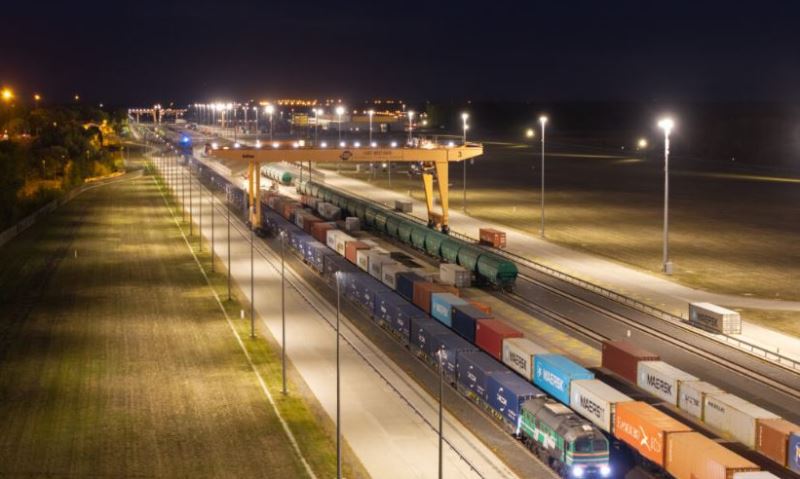
East-West Gate (EWG), an intermodal logistics terminal in Fényeslitke, Hungary, has received its first container train operated by CMA CGM, marking a significant step in the terminal’s efforts to strengthen its role in European maritime and inland freight logistics.
Announced on October 20, 2026, the development expands the terminal’s connections with major international shipping lines and follows the introduction of Maersk’s container depot and dry port services earlier this year. EWG Group said other major ocean carriers have also expressed interest in the region.
Strengthening Inland Logistics Connectivity
Located in north-eastern Hungary near the Ukrainian border, East-West Gate was originally developed to handle rail freight moving between China and Central and Eastern Europe under the Belt and Road Initiative. However, disruption to rail corridors through Ukraine forced the terminal to adapt its business model and explore alternative cargo flows.
The terminal is now focusing on supporting industrial imports into eastern Hungary and facilitating containerised agricultural exports from Ukraine. The region’s expanding electromobility and battery industries are generating demand for inbound containers, while agricultural exporters are exploring container transport for grain and other commodities.
Addressing Container Imbalances
The growth of industrial imports has created an imbalance between inbound and outbound container volumes, increasing the cost of repositioning empty equipment. EWG is working to connect shipping lines, industrial customers, agricultural exporters and freight forwarders to improve container utilisation and develop more balanced cargo flows.
The terminal is also developing solutions to move commodities traditionally transported in bulk into containerised supply chains, potentially opening additional opportunities for rail-based agricultural exports.
Expanding Beyond Traditional Transit Routes
East-West Gate covers approximately 850,000 square metres and combines terminal handling, rail transport and customs services. Its location at the meeting point of Ukraine’s broad-gauge railway network and Europe’s standard-gauge system gives it a strategic role in cross-border freight operations.
The arrival of CMA CGM’s first container train strengthens the terminal’s efforts to attract shipping lines and integrate maritime logistics with continental rail services.
For EWG, the development represents a shift towards a more diversified logistics model, with greater emphasis on regional industrial demand, agricultural exports and cooperation with international shipping companies rather than relying solely on traditional Eurasian transit routes.