
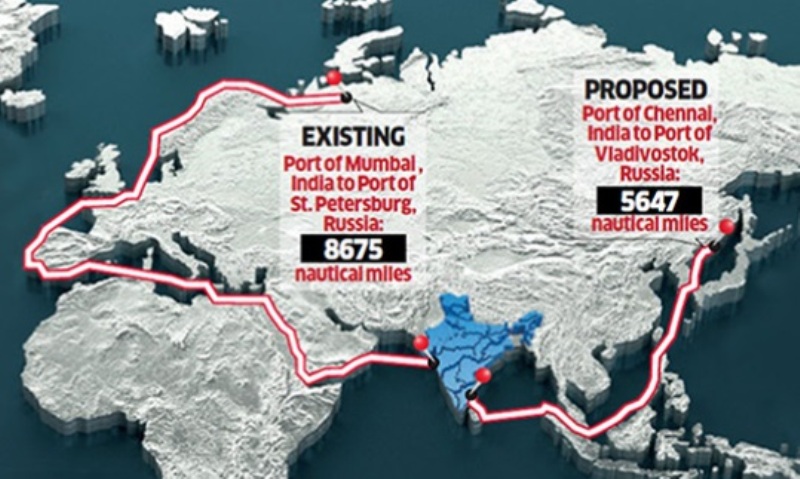
Recently, India emerged as the largest purchaser of Russian oil, overtaking China, which coincided with the establishment of the Eastern Maritime Corridor, which has enhanced trade between India and Russia. The new sea route from Chennai to Vladivostok has streamlined the transport of various commodities.
The Chennai-Vladivostok route spans approximately 5,600 nautical miles, and has reduced transit times by up to 16 days, allowing goods to reach their destinations in just 24 days. In contrast, the traditional route via Europe takes over 40 days.
Since early 2024, the route has facilitated the transport of crude oil, coal, liquefied natural gas (LNG), fertilizers, and containerized cargo. The efficiency of this route has been particularly beneficial for crude oil shipments.
A large ship can now travel from Vladivostok to Chennai in around 12 days. This is improvement compared to the 40 days required on the older route from Mumbai to St. Petersburg. Vladivostok serves as the largest Russian port on the Pacific Ocean. Indian ports such as Chennai, Paradip, Visakhapatnam, and Kolkata are utilized based on cargo type.
Recently, India’s top imports through this route included crude oil, coal, coke, vegetable oils, and fertilizers. Exports to Russia featured processed minerals, iron and steel, tea, and marine products.
By July 2024, India had solidified its position as the largest buyer of Russian oil. Although overall imports decreased in the latter half of the year due to maintenance at refineries, shipments of Urals crude reached a four-month high in October.
Closer ties with Russia offer India advantages beyond oil trade. These relations help reduce Russia’s dependence on China and enhance cooperation in military and nuclear technologies. Russian President Vladimir Putin is anticipated to visit India in 2025.