
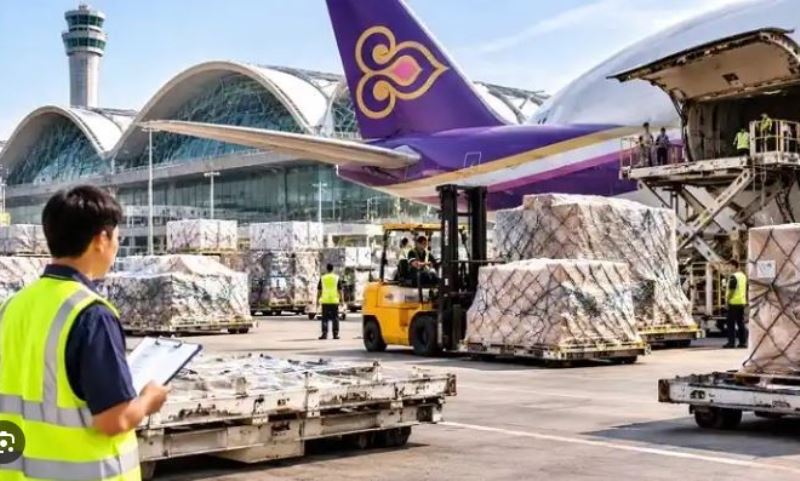
Freight forwarders are warning of continued air cargo delays at Bangkok’s Suvarnabhumi Airport as congestion at Thai Airways’ cargo terminal disrupts shipment processing, cargo collection and airline operations during the peak shipping season.
The backlog has been linked to problems with the AOT Cargo Clearhouse system, which is used to record shipment status and warehouse storage locations. Missing or inaccurate information has made it difficult for warehouse workers to locate consignments, delaying cargo release and creating additional pressure on terminal capacity.
According to industry reports, more than 1,000 cargo consignments were awaiting release, while approximately 700–800 pallets remained in the warehouse awaiting breakdown. Neither Thai Airways nor Airports of Thailand (AOT) has confirmed these figures.
Airlines introduce cargo restrictions
The congestion has prompted several airlines to introduce temporary restrictions on Bangkok-bound shipments.
Cathay Cargo temporarily limited acceptance of inbound cargo between November 7 and 22 to intact build-up unit load devices (BUP/ULDs) that can be released without breakdown. Certain temperature-controlled and special cargo shipments were exempted.
Singapore Airlines Cargo also introduced temporary restrictions on selected cargo categories, citing limited handling space and disruption to the circulation of cargo containers.
Thai Airways Cargo has suspended freighter operations through the end of November, until further notice, while measures are being taken to clear the backlog. Airlines have also been advised to manage inbound cargo volumes to reduce pressure on warehouse facilities.
Thai Airways and AOT step up recovery measures
Thai Airways has apologised to customers and airline partners and is adding personnel, forklifts and other handling equipment to accelerate cargo processing. The airline is prioritising shipments that arrived before October 23 while continuing to handle new consignments.
AOT has provided additional warehouse space, including facilities for oversized cargo, and is coordinating with Thai Airways, customs authorities and industry representatives to improve cargo movement.
The airline is also working towards introducing an internal warehouse management system to improve shipment tracking and record cargo locations throughout the handling process.
Manufacturers face supply-chain risks
The delays are raising concerns among importers and exporters, particularly manufacturers dependent on imported electronic components, machinery parts, pharmaceuticals and other time-sensitive materials.
Freight forwarders have urged Thai Airways to improve shipment visibility, provide accurate storage information and establish a central communication channel for cargo-related enquiries. Industry representatives have also called for targeted restrictions on non-essential imports rather than blanket cargo suspensions.
With peak-season demand adding pressure to already constrained facilities, the speed at which Thai Airways and AOT resolve the tracking and warehouse-handling problems will be critical to restoring normal air cargo operations at Suvarnabhumi.