
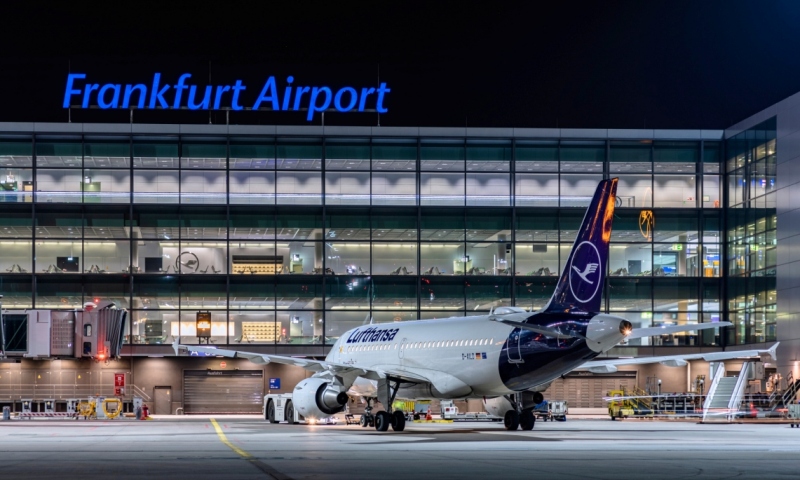
Frankfurt Airport’s cargo throughput rose 0.6% year on year in September to 170,505 metric tons, helped by traffic to and from Asia, although volumes between other regions fell.
Aircraft movements climbed by 5.5% to 41,997 takeoffs and landings. Accumulated maximum takeoff weights (MTOWs) were around 2.5m metric tons, representing a year-on-year increase of 2.9%.
“Growth was dampened by an unfavourable calendar configuration, with one less high-volume Sunday and one additional low-volume Tuesday compared to the previous year,” said Fraport.
“Conversely, the September 2024 figures were negatively affected by several days of technical difficulties at Lufthansa Cargo, which disrupted cargo handling.
“Overall, these two one-off effects largely offset each other, so the reported growth rate accurately reflects the underlying trend.”
Volumes on routes between China and Frankfurt were up 22%, primarily due to e-commerce trade. There was also a 1.2% growth between Frankfurt and Japan.
Fraport attributed this to the resumption of cargo flights by Nippon Cargo Airlines and its twice-weekly services with a Boeing 747-8F freighter.
Overall, cargo volumes with the entire Far East region rose by 6.8%. In contrast, a decline of 2.9% was recorded for US traffic, with loadings to the US declining 5.7%.
Canada also experienced a 1.3% decline, which meant that overall volumes with North America fell by 2.7%.
Tonnage with Latin America decreased by 6.8%. However, African traffic performed well, rising by 5.5%, driven particularly by higher bellyload volumes with South Africa.
Middle East traffic fell by 4.1%. Traffic with Qatar remained significantly below the previous year’s level, while cargo tonnage with Israel was able to record a strong increase.