
Global freight pricing, booking and procurement platform Freightos has announced the upcoming launch of Freightos AI, an artificial intelligence platform designed to help freight forwarders automate repetitive processes, consolidate fragmented data and make faster, data-backed decisions.
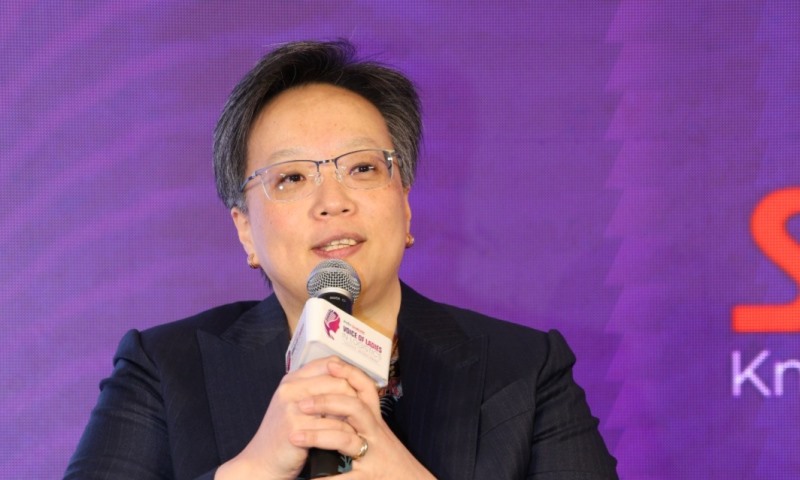
India has been selected as the first market for customer pilots, with the announcement made by Joyce Tai, Executive Vice President, Worldwide Partnerships, Freightos, at the Air Cargo Forum India (ACFI) World Conclave 2026 in Delhi on August 13.
“Today is our first time announcing the future launch of Freightos AI,” Tai said, describing India as the company’s first market for the announcement and initial rollout.
The platform will initially be developed and deployed through Freightos for Forwarders, formerly known as WebCargo, the company’s digital solutions suite for freight forwarders. Freightos plans to expand the technology into other segments of the freight industry as the platform matures.
Three pillars of Freightos AI
According to Tai, Freightos AI is being developed around three broad areas.
The first is agentic AI, which will enable AI agents to handle repetitive forwarding activities such as rate ingestion, rate uploading and rate cleansing. The technology is also expected to support functions including quotation preparation and sales assistance.
The second area is AI-assisted decision-making, where the platform will provide intelligence to forwarders while they search for rates, prepare quotations and book shipments.
The longer-term vision involves AI agents communicating with other agents and digital systems. Tai highlighted the potential role of the Model Context Protocol (MCP) in enabling different AI systems to understand each other’s context, roles and responsibilities and collaborate without creating additional technology silos.
India to lead initial customer pilots
Freightos plans to take a selective approach to the initial rollout and work with at least 30 organisations to test and refine the technology.
“We are going to carefully work with at least 30 organisations to try our solution,” Tai said, adding that individual organisations could have different requirements and different approaches to deploying agentic AI.
Subject to the pilot and onboarding process, Freightos expects some initial successful rollouts in India as early as the fourth quarter of 2026.
The choice of India reflects what Freightos sees as strong demand among Indian freight forwarders for greater control over their own technology journey.
Tai said India has a particularly high proportion of companies interested in building at least parts of their own front-end technology. Freightos sees an opportunity to provide the underlying data and act as a middleware and orchestration layer connecting different systems.
Data foundation remains critical
Freightos is also taking a measured approach to AI adoption, stressing that artificial intelligence cannot compensate for weak or fragmented digital foundations.
Tai said the company has spent more than 10 months developing Freightos AI without rushing to be among the first companies to announce an AI offering.
“We are not rushed to be the first to do AI or talk about AI,” she said, explaining that Freightos wants to work closely with customers and develop solutions around the way individual organisations operate.
Freight forwarders today often have customer information, buying and selling rates and operational data distributed across multiple systems, spreadsheets, laptops and documents. Freightos believes connecting this information is essential for AI to deliver meaningful value.
Once the data foundation is established, Freightos AI can bring relevant information together at the point where decisions are made. During quotation preparation, for example, the platform could combine shipment details with market conditions, congestion information, surcharges and customer history.
“If you don’t have the preparation and data foundation, nothing will come to you. You are working with an empty box,” Tai said.
AI integrated into the forwarding workflow
A product demonstration showed how Freightos AI could be incorporated into day-to-day forwarding operations.
A shipment request can be entered manually or received through a customer’s email. The system then extracts key details such as origin, destination, dimensions and weight and presents available rates in a consolidated view.
Forwarders can compare spot, contract and promotional rates, alongside information such as validity, transit time, total price, routing, schedules and aircraft details.
The platform can subsequently build a door-to-door quotation, covering pickup, origin handling, freight, destination handling and final delivery.
Its AI quote assistant can also estimate the probability of winning business and suggest commercial terms based on customer history. However, Freightos emphasises that the forwarder remains in control of the final decision.
“Suggestions only. You review, you decide. Nothing is ever sent without you,” the company said during the demonstration.
AI agents to monitor quotations
Another potential application is the monitoring of quotations after they have been sent to customers.
Freightos AI agents can track whether a customer has opened a quotation, identify when a quote is approaching expiry and monitor changes in market conditions. The system can then alert the forwarder and prepare a follow-up message for approval.
This could enable forwarders to spend less time monitoring individual quotations and more time focusing on customer relationships and commercial decisions.
From digitalisation to intelligent orchestration
For Freightos, however, the broader opportunity extends beyond faster quotations or automated administrative tasks.
The company sees AI as part of a longer transition from fragmented digital tools towards an interconnected freight ecosystem where data, decision-making and AI agents can work together.
Tai acknowledged that freight-forwarding companies are at different stages of digitalisation. Some continue to rely heavily on disconnected spreadsheets and documents, while others already have integrated systems and are looking at how multiple intelligent platforms can interact.
“For India, we want to say that if you are still taking baby steps about digitisation, like you are in phase zero, it’s fine. Don’t freak out about AI,” Tai said. “As soon as you have some data foundation, you can choose to turn on AI. Let AI help you with better decision-making.”
Freightos believes that this gradual, customer-led approach will be critical to successful AI adoption across the freight-forwarding industry.
“If you are not ready for it, AI is going to compound the complexity and chaos for your organisation,” Tai cautioned.
With India now selected as the first market for Freightos AI pilots, the initiative marks a significant step in Freightos’ efforts to bring artificial intelligence deeper into freight-forwarding workflows—starting with data and automation, and ultimately moving towards an ecosystem where intelligent agents can collaborate across the logistics value chain.