
Trade and economy officials from the Group of Seven wealthy democracies strengthened their pledge on Sunday to work together to ensure smooth supply chains for essentials like energy and food despite global uncertainties. The nations promised to maintain “a free and fair trading system based on the rule of law and enhancing economic resilience and economic security,” officials said in a joint statement.
Foreign minister Yoko Kamikawa, who co-hosted the two-day event in the western city of Osaka, pointed to Russia’s invasion of Ukraine and the Israel-Hamas war as the latest threats to stable energy and food supplies.
“We nations that share important values have a position of responsibility amid growing uncertainties,” she said in closing the meeting, stressing democracy, inclusiveness and human rights.
Worries are growing among developed nations about maintaining a stable supply of computer chips as well as essential minerals, like lithium, which are critical these days amid the demand for electric vehicles and other green energy.
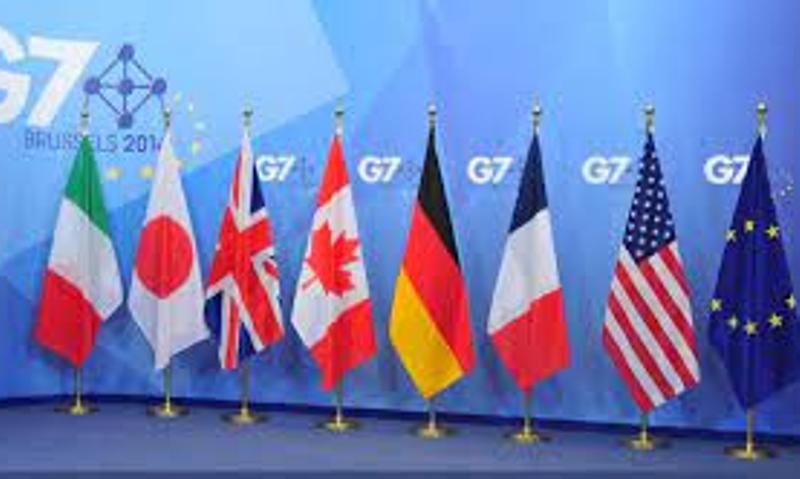
The G-7 includes the US, Canada, France, Germany, Italy, Japan and Britain. The European Union, Australia, Chile, India, Indonesia and Kenya were invited to take part in the two-day meeting, as were economic organisations such as the World Trade Organization.
The G-7 nations reiterated their criticism of what they called in their joint statement “Russia’s brutal, unprovoked, unjustifiable and illegal war of aggression against Ukraine.”
The participants discussed how trade policy can contribute to tackling climate change, strengthening food security, promoting digital trade and working toward sustainable development.
Trade is one sector where growing political tensions with China have been playing out, although China was not directly mentioned in the meetings.
China, while absent at the meetings, loomed as a focal point. China has imposed export curbs on two metals used in computer chips and solar cells – gallium and germanium – that it said were intended to “safeguard national security.”
At the G-7 summit in Hiroshima in southwestern Japan earlier this year, participants referred to “economic coercion” in an oblique reference to China’s leveraging some nations’ dependence for economic items. That phrase was again used at the Osaka G-7.
As the host nation, Japan focused on how China has banned imports of Japanese seafood after the recent massive release of treated wastewater from the Fukushima nuclear plant, which experienced reactor meltdowns in 2011.
Yasutoshi Nishimura, the Japanese minister in charge of trade and the economy, said G-7 nations expressed support and understanding for Japan’s position, stressing the safety of Japanese food based on scientific evidence, including that from Fukushima. Japan will continue to press for the food bans to end, he told reporters.
Nishimura also said the guest nations that took part in the G-7 meeting, including Australia and India, were potentially powerful allies in strengthening the supply chain in valuable materials.
Bilateral agreements on the sidelines included one between Britain and Japan to work together on mineral-supply chains that both sides said were essential to achieve clean energy and effective national defense.
Japan also reached a deal with the EU on digital data exchanges, affirming a commitment to work together on standards to facilitate digital-sector trade, including online exchanges.
Kamikawa also met with US Trade Representative Katherine Tai and reaffirmed bilateral ties in support of “the free and fair economic order,” and traded notes about the importance of women playing bigger roles on the G-7 stage.