
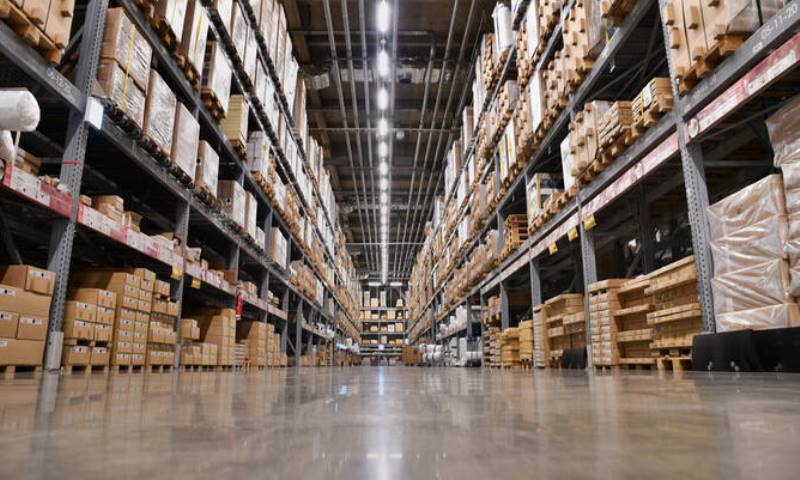
Saudi Arabia’s logistics and warehousing sector is expanding at a rapid pace, propelled by a growing e-commerce market and rising need for Grade A warehousing, according to global real estate consultancy JLL.
Among the key growth enablers are the Kingdom’s industrial and logistics sectors located in special economic zones (SEZs) and industrial hubs in prime locations.
Currently, 36 industrial cities offer ready-to-use facilities, including factories and storage units. Meanwhile, incentives and tax breaks at King Abdullah Economic City (KAEC), King Salman Energy Park (SPARK), and Jazan Economic City (JEC) are driving investment and innovation.
The logistics and industrial real estate market is gaining ground due to the Kingdom’s position as the largest e-commerce market in the GCC, supported by high internet access (97 percent), a young and tech-savvy population, and a growing preference for online shopping.
Modern commerce and e-commerce are expected to contribute around 80 percent to the retail sector by 2030, fueling strong demand for advanced storage solutions, fulfilment centres near consumers, and efficient last-mile distribution networks, JLL said.
The construction boom in Saudi Arabia, aligned with Vision 2030, has injected $850 billion into the construction industry, creating challenges for global supply chains.
In response, businesses and investors are adopting proactive strategies such as supply chain diversification, investing in local manufacturing to enhance self-sufficiency, implementing best practices to optimise inventory and minimise lead times.
The National Industrial Development and Logistics Programme (NIDLP), one of Vision 2030’s core pillars, aims to increase the logistics sector’s GDP share from 6 percent to 10 percent by 2030, and localise 70 percent of the supply chain.