
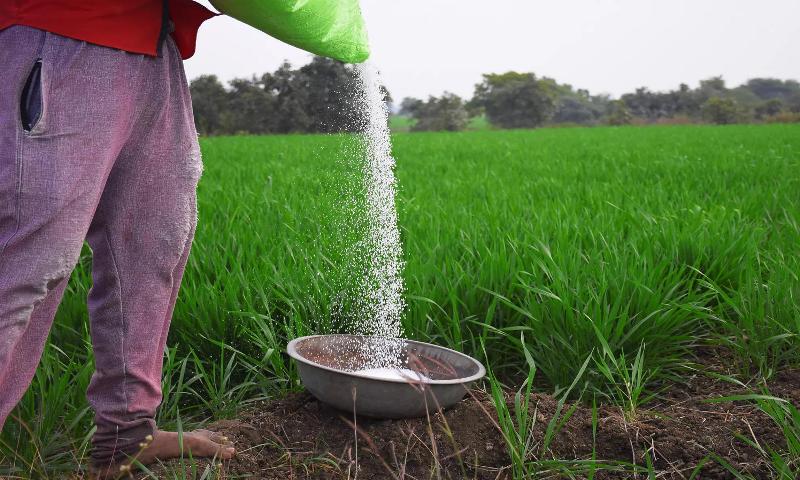
Amid reports of China withholding exports of specialty fertilisers to India over the past few months, domestic companies have turned to alternative suppliers in Belgium, Egypt, Germany, Morocco and the United States to bridge the supply gap, the government informed Parliament on Friday.
In a written reply to the Lok Sabha, Minister of State for Fertilisers Anupriya Patel clarified that specialty fertilisers fall outside the Nutrient Based Subsidy (NBS) scheme overseen by the Department of Fertilisers, and are thus unsubsidised.
“Fertiliser companies are free to import these products based on market dynamics,” she said.
Patel highlighted ongoing efforts by Indian research bodies to foster self-reliance in nutrient management.
Institutions such as the Indian Council of Agricultural Research (ICAR) and State Agricultural Universities are developing indigenous alternatives, including zinc EDTA, boron blends, nano-fertilisers and bio-fertilisers enriched with micronutrients like zinc-solubilising bacteria.
These innovations, she noted, are aimed at reducing import dependence while promoting sustainable agricultural productivity.
ICAR’s institutes, including the Indian Institute of Soil Science (IISS) in Bhopal, the Indian Agricultural Research Institute (IARI) in Delhi, and the Indian Institute of Horticultural Research (IIHR) in Bengaluru, have pioneered technologies such as nano-fertilisers, bio-fertilisers and customised nutrient blends.
These advancements are bolstered by government initiatives like Soil Test-Based Fertiliser Recommendations and Site-Specific Nutrient Management (SSNM), which form the backbone of a comprehensive Integrated Nutrient Management Strategy.
Under the Fertiliser Control Order (FCO) of 1985, no category is explicitly classified as “specialty fertiliser”. However, it includes provisions for 100 per cent water-soluble complex fertilisers and 100 per cent water-soluble mixtures.
Official data underscores China’s dominant role in India’s imports of water-soluble fertilisers. In the 2024-25 fiscal year, 1.71 lakh tonnes were sourced from China, accounting for 65.65 per cent of the country’s total imports of 2.60 lakh tonnes. This compares to 1.22 lakh tonnes from China in 2023-24, or 59 per cent of the 2.07 lakh tonnes imported that year.