
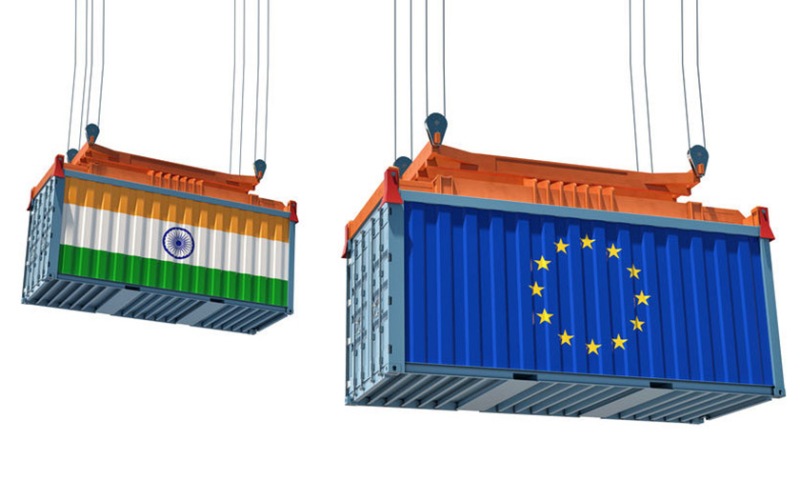
India and the European Union have completed the legal scrubbing of their landmark Free Trade Agreement (FTA), clearing a major procedural hurdle and paving the way for the pact to be formally signed later this year.
The agreement, whose negotiations were concluded in January 2026 after years of discussions, is now moving through the final approval process on the European side. The pact is expected to be signed on a mutually agreed date before the end of the year.
The India-EU FTA is being described as a landmark trade agreement because of the scale of the two markets. Together, India and the 27-member EU account for around 25% of global GDP and approximately $11 trillion of international trade.
A key feature of the agreement is improved market access for Indian exporters. Around 93% of Indian shipments to the EU are expected to receive duty-free access under the pact, creating opportunities for sectors such as textiles, leather, marine products, agriculture, engineering goods and other labour-intensive industries.
The agreement will also provide European exporters with greater access to the Indian market. Import duties on selected products, including luxury automobiles and wines, are expected to be reduced under the negotiated framework.
Beyond tariff reductions, the pact is expected to strengthen cooperation on trade facilitation, regulatory procedures and non-tariff barriers. The agreement also addresses areas such as sanitary and phytosanitary measures, intellectual property and digital and emerging technologies.
For Indian industry, the agreement could provide a major opportunity to expand exports into one of the world’s largest and most affluent markets. Preferential access could improve the competitiveness of Indian products while encouraging companies to integrate more deeply into European supply chains.
However, formal signing will not immediately make the agreement operational. Following signature, the pact will have to go through the required ratification and approval procedures in India and the EU. The agreement is therefore expected to come into effect only after these processes are completed, with early 2027 previously indicated as a likely implementation timeframe.
The completion of legal scrubbing marks an important milestone for the long-awaited agreement. With the technical text now finalised, attention will shift to the remaining approvals and the formal signing of what is expected to become one of India’s most significant trade partnerships.
For Indian exporters, the FTA could ultimately provide wider market access, lower tariff barriers and greater opportunities to expand shipments to the European Union, strengthening India’s integration with global value chains.