
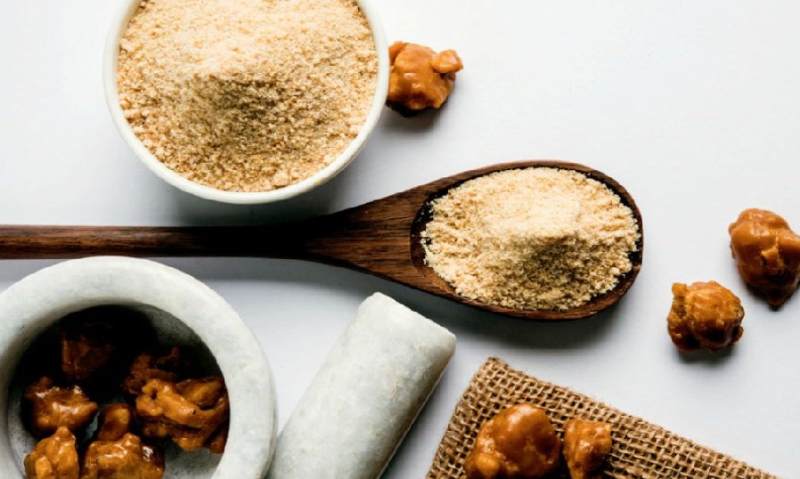
Hathras, a city in Uttar Pradesh, has earned its reputation as a hub for producing the finest quality asafoetida (also known as ‘hing’ locally) due to its royal connections with Afghanistan. The fragrant spice, celebrated internationally for its distinctive flavour and widespread ayurvedic applications, holds a special place not just in India but also in countries such as Afghanistan, Bangladesh, Pakistan and Saudi Arabia.
Import statistics
Asafoetida pricing
The pricing of asafoetida, imported from Afghanistan, Uzbekistan and Tajikistan, varies significantly, ranging from Rs 2,000 to Rs 55,000 per kilogram. In the current market, Tajikistan’s asafoetida is priced at Rs 550 for 10 gm, Uzbekistan’s at Rs 350, and a combination of Afghanistan and Uzbekistan at Rs 250. Additionally, milky asafoetida is available at Rs 200 per 10 gm.
Kamal Dixit highlights that although there are over 130 types of asafoetida, only 4-5 varieties of the fragrant spice are commonly utilised.
Tip to spot real from fake
Dixit shared a valuable tip for consumers to distinguish real asafoetida from fake ones. Rather than relying on appearance or fragrance, placing a small piece of asafoetida on the tongue can reveal its authenticity, he says. Genuine asafoetida, especially from Hathras, provides a unique taste without causing irritation, he emphasised.