
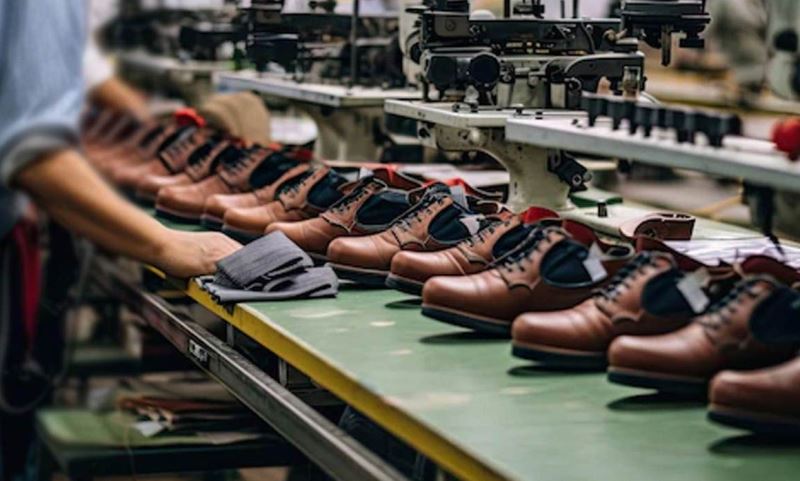
The Indian footwear industry is gearing up for transformative changes as it strives to achieve a market size of USD 26 billion, including USD 8 billion in exports, by 2030.
The Union Commerce Ministry, along with industry stakeholders, is focusing on bolstering local manufacturing capabilities, enhancing quality standards, and fostering self-reliance.
A key reform is the introduction of the Bureau of Indian Standards (BIS) norms for all footwear, effective April 2025. This move aims to ensure that Indian companies manufacture high-quality products that meet stringent quality benchmarks.
Another landmark initiative is the adoption of Indian-specific shoe sizes, moving away from UK and US standards. From April 2025, Indian consumers can expect shoes tailored to their unique sizing needs, said Sanjay Gupta, President of the Indian Footwear Components Manufacturers Association (IFCOMA).
Gupta emphasized the importance of local production in achieving the sector’s ambitious goals. “The 32 components involved in shoe manufacturing play a pivotal role in meeting the USD 26 billion target.
We’re working to ensure all components are produced domestically, backed by government support,” he stated at the ShoeTech 2024 exhibition in Mumbai.
The Indian footwear component sector, guided by Prime Minister Narendra Modi’s vision, is set to supply 50 per cent of the domestic footwear demand by 2028.
Plans include developing 10,000 micro and small component suppliers and boosting R&D efforts to foster innovation.
Industry leaders see government initiatives, such as the Production Linked Incentive (PLI) scheme, as game changers. Naresh S. Bhasin, MD of Ram Fashion Exports, highlighted that BIS norms would lead to import substitution, positioning India for exponential growth.
Meanwhile, Vikas Mahatani, Chairman of the Western Region CLE, projected Maharashtra as a future hub for leather shoe manufacturing, thanks to a supportive ecosystem.
With these changes, the Indian footwear industry is poised to elevate its global standing, ensuring high-quality, locally manufactured products tailored for Indian consumers.