
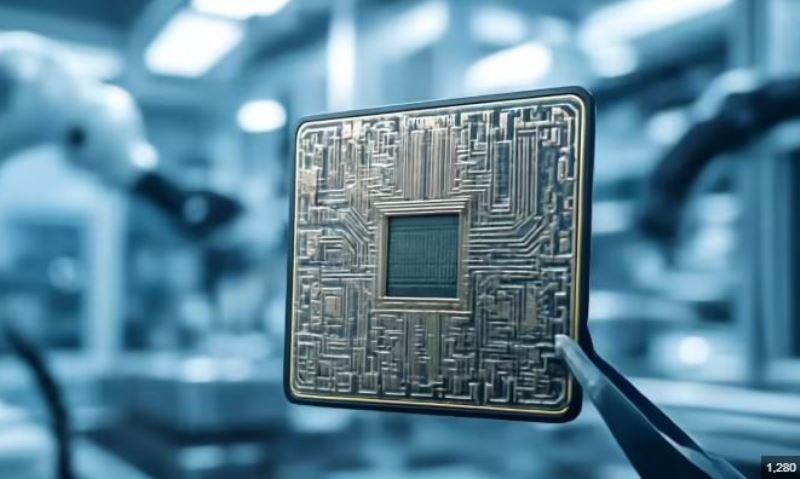
India’s financing landscape is expected to undergo a shift over the next three to five years, with banks increasingly exploring opportunities in battery storage, semiconductor packaging, green hydrogen projects backed by assured buyers, and defence supply chains, according to a research report by Union Bank of India.
The report identified artificial intelligence (AI), semiconductors and defence as major contributors to the investment pipeline, with indicative public and private investments of approximately ₹5.9 lakh crore, ₹5.27 lakh crore and ₹5.07 lakh crore, respectively.
As these industries expand, financing opportunities are expected to extend beyond large projects to include semiconductor assembly and advanced packaging, battery recycling, lithium iron phosphate (LFP) and sodium-ion battery manufacturing, energy storage infrastructure, and component suppliers serving the defence sector.
Green Hydrogen and AI Infrastructure Offer Emerging Opportunities
The report highlighted green hydrogen projects supported by assured offtake agreements as potential candidates for bank financing. Such agreements can provide greater revenue visibility and help lenders assess project viability.
Demand for data centres is also expected to evolve as AI adoption accelerates, with investment opportunities expanding towards edge computing and colocation facilities to support the growing need for AI inference.
However, the report cautioned that emerging sectors present distinct lending challenges, including rapid technological obsolescence, uncertain revenue streams, delayed payments and extended investment recovery periods.
Semiconductor projects typically require five to eight years to recover their investments, while space-sector projects may take seven to ten years. These timelines can exceed conventional loan tenures and complicate credit assessment.
AI infrastructure presents an additional challenge because of rapid technology cycles. Graphics processing unit (GPU) clusters may require upgrades every 18 to 24 months, creating uncertainty over asset life, future competitiveness and repayment capacity.
Banks Need Specialised Financing Models
According to the report, ten of the twelve emerging sectors already have identifiable debt-financing pathways. AI and space, however, remain predominantly equity-funded because of technology risks, uncertain cash flows and long payback periods.
The report recommended that banks develop specialised lending capabilities for semiconductors, green hydrogen, data centres and battery storage. It also highlighted the potential for financing structures tailored to the operating and cash-flow characteristics of these industries.
These could include milestone-linked loan disbursements, receivables financing, equipment leasing and green loans, enabling lenders to manage project risks while supporting investment in new industrial capabilities.
The report identified renewable energy, semiconductors, green hydrogen and critical minerals as sectors suited to project finance and funding led by development finance institutions. Electric vehicles and drones, meanwhile, could benefit from asset-backed financing and lending through non-banking financial companies (NBFCs).
Renewable Energy and Electric Mobility Expand the Financing Pipeline
India’s renewable energy capacity stood at 288.6 GW, against the national target of 500 GW by 2030, according to the report. The gap between current capacity and the target represents a substantial requirement for further investment in generation and supporting infrastructure.
The electric vehicle and battery storage market was projected to expand from $34 billion to $113 billion by 2030, creating potential financing demand across manufacturing, storage systems, battery supply chains and associated infrastructure.
As these sectors mature, financing opportunities are expected to shift increasingly towards commercially viable projects and businesses across their supply chains.
The report’s findings point to a broader transition in India’s industrial financing landscape. For banks, the opportunity will lie not only in funding large infrastructure projects but also in developing specialised credit products and risk-assessment capabilities to support emerging technologies, domestic manufacturing and strategic supply chains.