
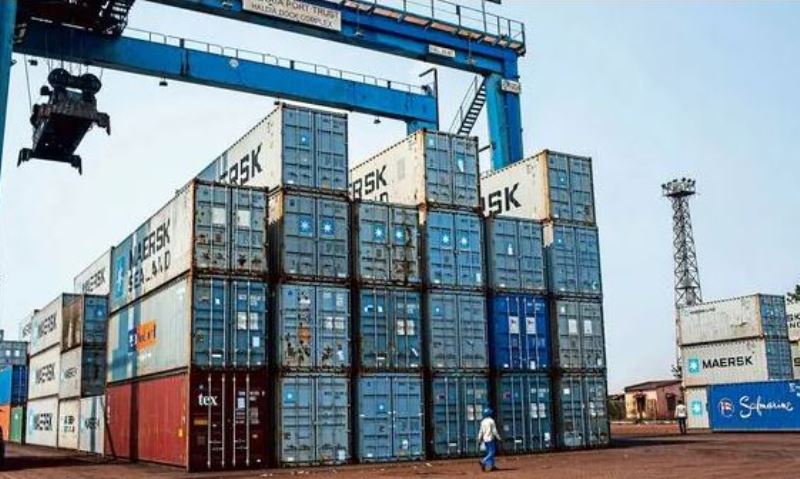
Indonesia recorded a trade surplus of $3.32 billion in March, exceeding market expectations despite a decline in exports, as import growth slowed more than anticipated, according to official data.
The surplus was significantly higher than the $2.41 billion median forecast in a Reuters poll and well above February’s $1.28 billion figure, underscoring the continued resilience of Southeast Asia’s largest economy amid global uncertainty.
Exports fell 3.1% year-on-year to $22.53 billion, missing expectations of a modest increase. The decline was attributed to reduced shipments of key commodities such as copper, lignite, cocoa, coffee, and tea, reflecting softer global demand and the impact of earlier front-loaded exports to the United States.
Analysts noted that slowing demand from major markets, particularly China, along with escalating geopolitical tensions in the Middle East, are weighing on Indonesia’s export performance. Rising global uncertainties have also contributed to volatility in commodity prices and trade flows.
Imports rose by a modest 1.51% to $19.21 billion—far below forecasts of a 10% increase—after businesses had accelerated purchases in previous months ahead of the Eid Al-Fitr holidays and amid concerns over potential supply chain disruptions.
The Indonesian rupiah has come under pressure, recently hitting a record low against the U.S. dollar, increasing the cost of imports. Meanwhile, concerns over geopolitical tensions, including the ongoing conflict involving Iran, have added to inflationary pressures through higher global energy prices.
Looking ahead, economists expect Indonesia’s trade surplus to narrow in the coming months, driven by a likely increase in fuel imports as oil prices rise.
On the inflation front, Indonesia’s annual inflation eased to 2.42% in April from 3.48% in March, coming in below expectations. Core inflation also edged lower, supported by government subsidies and efforts to stabilise food prices.
Bank Indonesia is expected to maintain its benchmark interest rate at 4.75%, with inflation projected to remain within its target range of 1.5% to 3.5% through 2027, aided by continued government intervention in fuel and essential commodity pricing.