
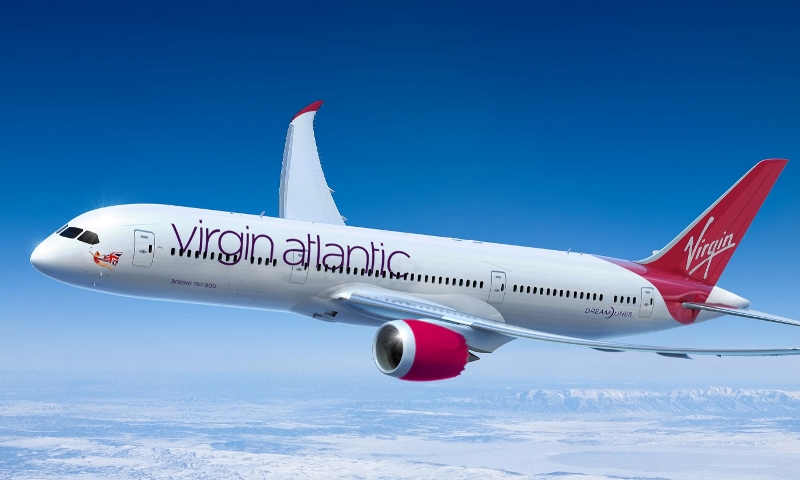
On November 28, 2023, the world’s first 100% Sustainable Aviation Fuel (SAF) transatlantic flight by a commercial airline successfully landed at New York JFK after its departure from London Heathrow. Kuehne+Nagel, a leader in sustainable logistics, actively engages in projects that encourage and promote the use of sustainable fuels within the logistics sector. As part of its efforts, Kuehne+Nagel secured the available cargo space on this SAF-powered flight and utilised the corresponding amount of SAF for the transported goods.
Yngve Ruud, Member of the Management Board of Kuehne+Nagel responsible for Air Logistics comments: “This is a historic moment in our collective journey towards sustainable aviation and we are very proud to represent the air cargo industry on the world’s first 100% Sustainable Aviation Fuel transatlantic flight by a commercial airline. It is an honour to support this Virgin Atlantic led consortium, pushing the boundaries of decarbonisation in aviation.”
Kuehne+Nagel is committed to the science-based targets to decarbonise the logistics sector and drive the change towards a zero-carbon future. This flight represents the next step in sustainable aviation by demonstrating the potential of using SAF as a 100% drop-in replacement for fossil fuel.
The Virgin Atlantic led consortium, joint funded by the UK Department for Transport, includes Rolls Royce, Boeing, University of Sheffield, Imperial College London, and Rocky Mountain Institute.
The SAF used to power the two Rolls-Royce Trent 1000 engines on the Boeing 787 Dreamliner is produced by Hydroprocessed Esters and Fatty Acids (HEFA) and Synthetic Aromatic Kerosine (SAK) at an 88% SAF and 12% SAK blend ratio.