
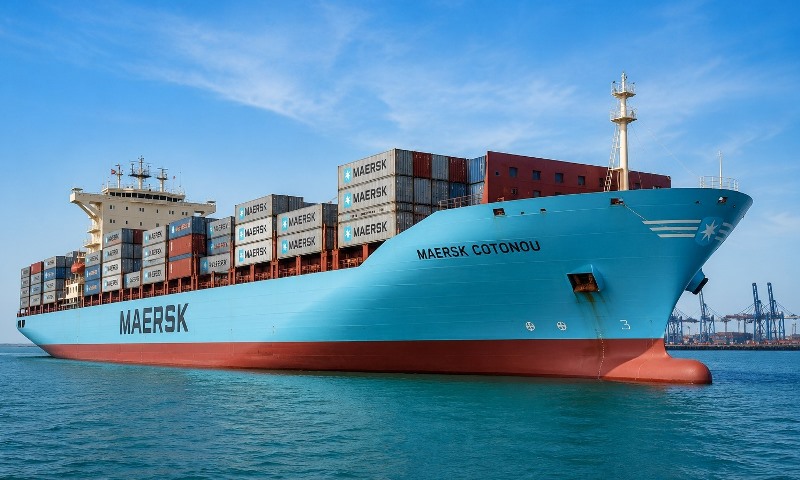
Maersk has begun deploying larger vessels on its India-US East Coast (USEC) trade as it seeks to capture a greater share of a market that has recorded strong cargo demand in recent months.
The carrier is introducing larger tonnage on its MECL service, replacing vessels in the 6,000–8,000 TEU range with ships of around 9,000 TEU capacity. The first larger vessel, Maersk San Cristobal, began the deployment with a call at Nhava Sheva on September 21, while additional larger vessels are expected to enter the service toward the end of the year.
The upsizing comes as competitors have reduced capacity on the India-US East Coast corridor. MSC has withdrawn its Indus Express service, while ONE has also downsized its direct WIN service, leaving Maersk with an opportunity to expand its presence on the trade.
The MECL service is expected to operate with 12 vessels, serving Indian ports including Mundra, Pipavav and Nhava Sheva, before calling at US East Coast and Gulf ports. Industry sources estimate that Maersk’s larger ships could add around 1,000–1,500 TEUs of weekly capacity from November.
The capacity expansion follows Maersk’s earlier decision to increase MECL capacity in anticipation of higher India-US cargo flows following changes in US tariffs on Indian goods.
India-US East Coast spot freight rates have remained elevated, although recent data indicate some easing. Strong Indian export volumes, tariff-related front-loading of cargo and capacity withdrawals by competing carriers have supported the market.