
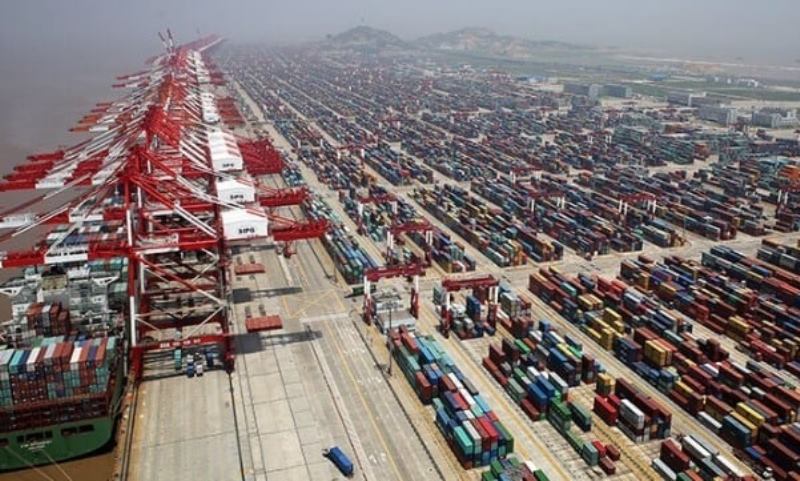
Container shipping schedule reliability has deteriorated sharply across Asia, with all 14 of the region’s busiest container ports recording declines in on-time vessel arrivals in July, according to maritime analyst Sea-Intelligence.
The disruption comes as major Asian ports contend with repeated typhoon-related interruptions, adding to congestion and delays across the container shipping network.
The world’s two largest container ports, Shanghai and Ningbo-Zhoushan, have been particularly affected. Ningbo-Zhoushan, which became the world’s second-largest container port in the first half of 2026, saw its schedule reliability plunge by 20.1 percentage points to 34.6% in July, according to Sea-Intelligence.
The situation in Shanghai was even more concerning. Schedule reliability fell by 19.2 percentage points, leaving only 21% of vessels arriving on time in July.
“Outside of extreme pandemic-era supply chain disruptions, schedule reliability in Shanghai has never dropped this low in 14 years of recorded data,” said Alan Murphy, CEO of Sea-Intelligence.
The sharpest decline among the major Asian ports was recorded at Yantian in South China, where reliability fell by 23.5 percentage points to 48.3%. Hong Kong also experienced a substantial deterioration, with reliability dropping by 20.4 percentage points to 51.6%.
At the world’s largest transhipment hub, Singapore, schedule reliability declined by 5.7 percentage points to 43.2%. Other major regional hubs also recorded weak performance, with Port Klang at 33.3% and Busan at 40.9%.
The deterioration across Asian ports contributed to a broader decline in global container shipping schedule reliability. Overall reliability fell by 6.1 percentage points to 56.1% in July, marking the steepest month-on-month decline since January 2021, at the height of the COVID-19 pandemic.
“With the region’s busiest ports operating with more than half of their incoming vessels delayed, this backlog will naturally cascade through the maritime network, likely triggering a new wave of delays for critical head-haul trade lanes in the coming months,” Murphy said.
Port congestion adds pressure on Asia-Europe services
The worsening congestion at major Asian ports is also putting pressure on container shipping lines to reassess their Asia-Europe routing strategies.
After more than two and a half years of diverting services around the Cape of Good Hope, carriers are increasingly considering a return to the Suez Canal and Red Sea route, despite continuing security concerns linked to Houthi attacks and disruptions in the region.
A return to the shorter Suez route could reduce sailing times and vessel requirements, but renewed security risks in the Red Sea remain a major consideration for carriers.
With schedule reliability already under significant pressure across Asia, any changes in routing could further influence vessel deployment, port congestion and transit times across the global container shipping network.