
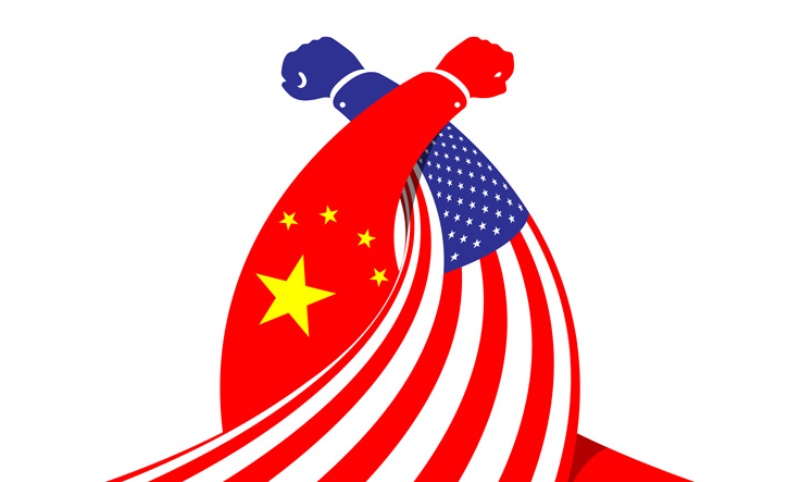
Mexico, Canada, and 10-nation Southeast Asian bloc ASEAN benefited more from the US-China trade war than India, economic think tank GTRI said in a report.
It said that India has to strengthen its local supply chains and produce critical intermediates to reduce reliance on China, while improving cost efficiency and ease of doing business to enhance competitiveness of domestic industries and increase exports to the US.
With Donald Trump again becoming the US President, the evolving trade landscape offers huge opportunities for the Indian industry as he is now planning new tariffs targeting Mexico, Canada, China, and others.
The US-China trade war, initiated in 2018 under President Trump with tariffs targeting key sectors, has significantly reshaped global trade flows but failed to achieve its primary goals.
“Key beneficiaries of the trade war included Mexico, Canada, and ASEAN nations, which collectively accounted for 57 per cent of the growth in US imports. India also emerged as a significant gainer, with exports to the US rising by $36.8 billion, driven by sectors like electronics, pharmaceuticals, and engineering goods,” GTRI Founder Ajay Srivastava said.
Mexico emerged as the biggest winner, with an increase in exports by $164.3 billion to the US between 2017 and 2023. It was followed by Canada ($124 billion), Vietnam ($70.5 billion), South Korea ($46.3 billion) and Germany ($43 billion).
The report said that India ranked sixth, with a $36.8 billion increase in exports, driven by growth in electronics, pharmaceuticals, and engineering goods.
Key contributors to India’s export growth included smartphones and telecom equipment, which saw a $6.2 billion increase, accounting for 17.2 per cent of the total rise.
Medicines contributed $4.5 billion (12.4 per cent), petroleum oils added $2.5 billion (6.8 per cent), and solar cells accounted for $1.9 billion (5.3 per cent).
“India needs to increase local value addition in exports, as many rely heavily on imported inputs. For instance, most smartphone parts are imported, solar cells for panels come largely from China, and up to 70 per cent of APIs (pharma raw material) for medicines are also imported from China,” it added.
The think tank suggested the US to limit the use of Chinese inputs in all products exported to the US by recasting non-preferential rules of origin and this will be a more effective mechanism than imposing higher tariffs.
The US, India’s largest trading partner with over $190 billion in bilateral trade, plays a pivotal role in India’s economic landscape and to navigate a potential Trump-led trade era, India can lower import tariffs by modest adjustments and could bring average tariffs down to around 10 per cent without significantly affecting revenue.