
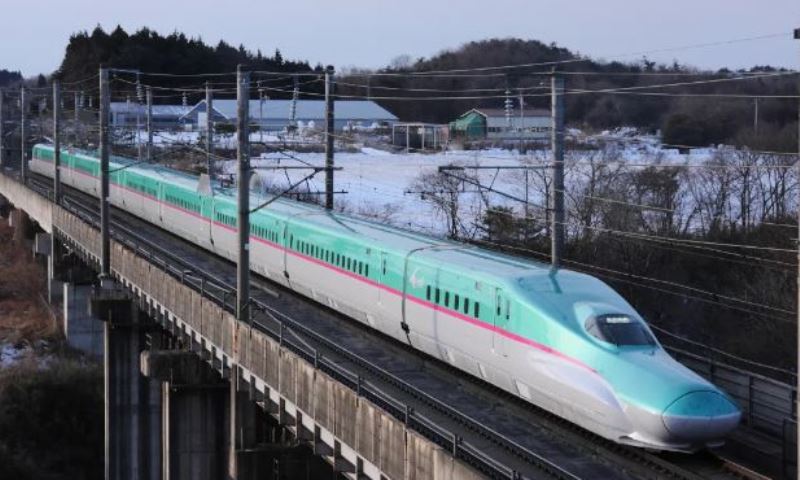
The National High Speed Rail Corporation Limited (NHSRCL) on Friday said it has received more than 35,000 MT of rails and four sets of track construction machinery for the Ahmedabad-Mumbai bullet train project. The process of flash-butt welding of rails to form 200-meter-long panels has started on the viaduct as track construction is underway near Surat and Anand cities in Gujarat, the NHSRCL said in a release.
The 508 km high-speed corridor is being constructed between Ahmedabad and Mumbai.
The bullet train project will have a J-Slab track system based on the Japanese Shinkansen track system. This is the first time the system will be used in India, it said.
The process of track installation is mechanised with cutting-edge machinery, specially designed and manufactured as per Japanese specifications, it was stated.
As per the release, the NHSRCL has received more than 35,000 MT of rails and four sets of track construction machinery for the project.
The fleet of machines includes rail feeder cars, track slab laying and CAM-laying cars and flash-butt welding machines for track construction, it said.
To understand the methodology of Shinkansen track construction, training and certification courses were organised for Indian engineers, work leaders and technicians.
The 25-meter-long 60 kg JIS rails are welded using a flash-butt welding machine (FBWM) to form 200-metre panels at the TCB (track construction base) over the viaduct.
Three FBWMs have been procured till now, and the training for rail weld finishing and testing was completed, the NHSRCL said.
Precast track slabs are lifted onto the viaduct, loaded on specially designed wagons and moved to the track laying location. Using TSLC, which can handle five slabs at a time, track slabs are laid in position on the track bed, it said.
Four TSLCs have been arranged for slab laying work so far, it said.
The panels are transported and spread over track beds using a rail feeder car and special wagons. These cars push the rail pair over the track bed, and a temporary track will be laid initially, it said.