
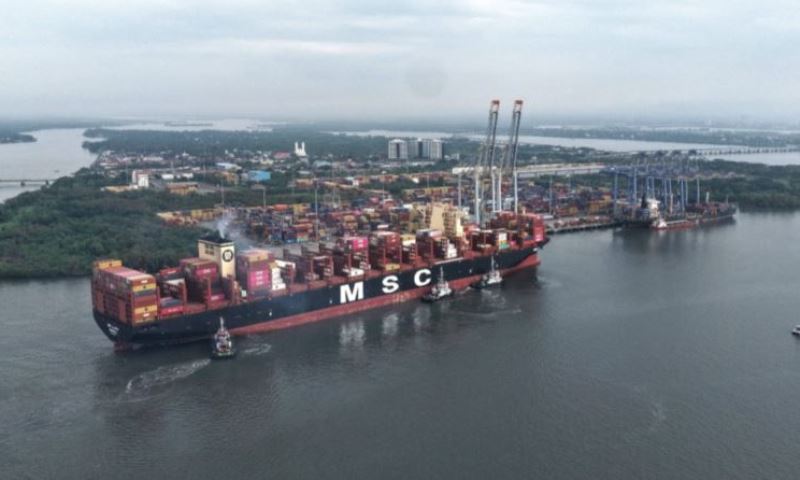
Mediterranean Shipping Company’s MSC Ajaccio, operating on the Mediterranean South America East Coast (MSE) service, has omitted its scheduled call at Livorno, Italy, as part of measures to recover its sailing schedule.
According to a customer advisory issued by Hapag-Lloyd on October 19, the vessel’s voyage MM642A was originally scheduled to call at Livorno on October 17, 2026. The port omission was introduced to help restore schedule reliability across the service.
The change affects both import and export cargo moving through Livorno.
Import shipments originally scheduled for discharge at Livorno will instead be discharged at Barcelona, Spain, and transferred to the next MSE service vessel, MSC Meline (voyage MM643A), scheduled to call on October 23.
Export cargo originally planned for loading at Livorno will be accommodated on the first available vessels, taking into account revised routing arrangements and transit times.
Hapag-Lloyd has advised affected customers to review their updated booking confirmations and ensure that shipping documentation reflects the revised vessel and routing details.
Port omissions are a common schedule-recovery measure in container shipping, allowing carriers to address delays and maintain service rotations when disruptions affect vessel schedules.
The latest adjustment highlights the importance of monitoring carrier advisories and coordinating closely with freight forwarders to minimise potential disruptions to cargo delivery and onward transportation.