
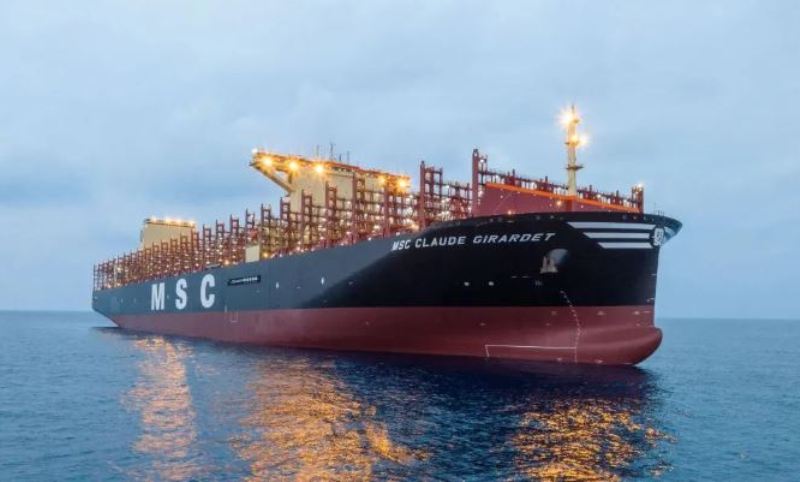
Mediterranean Shipping Company (MSC), the world’s largest container liner operator, has reportedly placed an order for 20 additional ultra-large container ships, each with a capacity of 24,000 TEU, from China’s Hengli Heavy Industries.
If confirmed, the reported order would add 480,000 TEU to MSC’s orderbook, further strengthening its position in the global container shipping market. However, neither MSC nor Hengli has officially confirmed the deal. Details regarding the contract value, delivery schedule and engine specifications remain undisclosed.
According to shipping consultancy Linerlytica, the global container ship orderbook has reached 16.2 million TEU, equivalent to 46.5% of the existing fleet capacity. This represents the highest orderbook-to-fleet ratio since 2009, highlighting the scale of investment in new vessel capacity.
At the end of September 2026, MSC operated a fleet with a combined capacity of approximately 7.4 million TEU, representing around 21.5% of global liner capacity, according to Alphaliner data cited in the report. The carrier already had approximately 2.94 million TEU on order, taking its combined operating fleet and orderbook beyond 10 million TEU.
If the latest reported order materialises, MSC’s total orderbook capacity would exceed 3.4 million TEU, adding to its already substantial pipeline of new vessels.
Strategic Partnership with Hengli
MSC and Hengli Heavy Industries signed a strategic cooperation agreement in August 2024 covering new shipbuilding, marine engines, ship repairs and vessel retrofits. Since then, the Chinese shipbuilder has secured a substantial volume of orders from the shipping giant.
If the reported order for 20 additional vessels is confirmed, the number of container ships with capacities of 20,000 TEU or more commissioned through the partnership would reach 62, according to the report. The vessels ordered under the partnership range from 21,000 TEU to 24,000 TEU, with deliveries expected to begin in 2027.
MSC has already ordered ten 21,000-TEU LNG dual-fuel container ships from Hengli. The contract marked Hengli’s entry into full-vessel container shipbuilding and its first order for dual-fuel vessels.
Hengli announced that the first two ships in the series, C21K-1 and C21K-2, were launched on October 16. Each vessel measures 380 metres in length, 58.6 metres in breadth and 33.2 metres in depth.
The fuel and propulsion specifications of the latest reported order remain unknown, leaving it unclear whether the additional vessels will use conventional fuels or alternative-fuel technologies.
Hengli Expands Its Commercial Shipbuilding Portfolio
Hengli Heavy Industries has also been expanding its presence in other commercial vessel segments. Since the beginning of October, the shipbuilder has announced 28 confirmed orders, according to the supplied report.
The orders include 11 very large ammonia carriers (VLACs) with capacities ranging from 88,000 to 93,000 cubic metres, six very large crude carriers (VLCCs), four LR2 tankers, two Suezmax tankers, four feeder container ships and one bulk carrier.
The reported MSC order, if confirmed, would further underline Hengli’s growing role in the global shipbuilding market.
Meanwhile, the expanding container ship orderbook raises questions about the industry’s future capacity balance. While new vessel investments reflect continued confidence among major carriers, their eventual impact on freight rates and market conditions will depend on fleet growth, cargo demand, vessel deliveries and the pace at which older ships are withdrawn from service.