
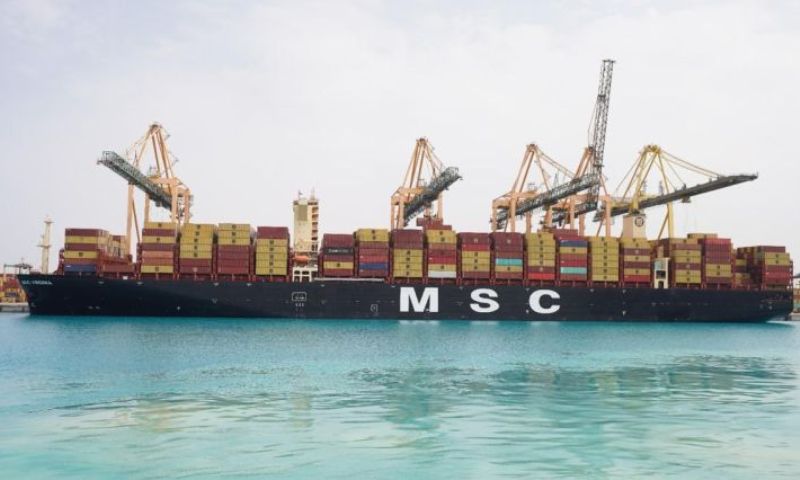
Mediterranean Shipping Company (MSC) continues to reinforce cargo movement across the Middle East region, positioning King Abdullah Port as a critical node in its expanding logistics network along Saudi Arabia’s western coast.
Strategically located on the Red Sea, King Abdullah Port serves as a vital gateway for international trade, enabling seamless connectivity between global shipping lanes and inland markets. MSC’s growing focus on this port underscores its importance in facilitating efficient cargo flows to and from the Kingdom and the wider Gulf region.
Leveraging its advanced intermodal capabilities, MSC integrates maritime, rail, and road transport solutions to connect the port with key markets across the GCC. This approach enhances supply chain efficiency by reducing transit times, improving cargo reliability, and ensuring smoother inland distribution. The multimodal framework also supports better cargo visibility and coordination, which is increasingly critical in today’s dynamic trade environment.
MSC’s integrated logistics model is designed to deliver consistency and adaptability for customers navigating evolving market conditions. By aligning port operations with inland transport networks, the company enables more flexible routing options and optimized cargo handling, ultimately driving greater value for shippers and consignees.
In addition to operational efficiency, MSC’s strategy contributes to more sustainable logistics practices. Intermodal transport solutions help reduce carbon emissions by optimizing modal shifts and minimizing unnecessary road congestion, aligning with broader industry goals for greener supply chains.
As regional trade continues to gain momentum, MSC’s strengthened presence at King Abdullah Port highlights its commitment to supporting economic growth and enhancing connectivity across the GCC. The company’s continued investments in integrated logistics infrastructure are expected to further streamline cargo movement and reinforce the region’s position as a key hub in global trade networks.