
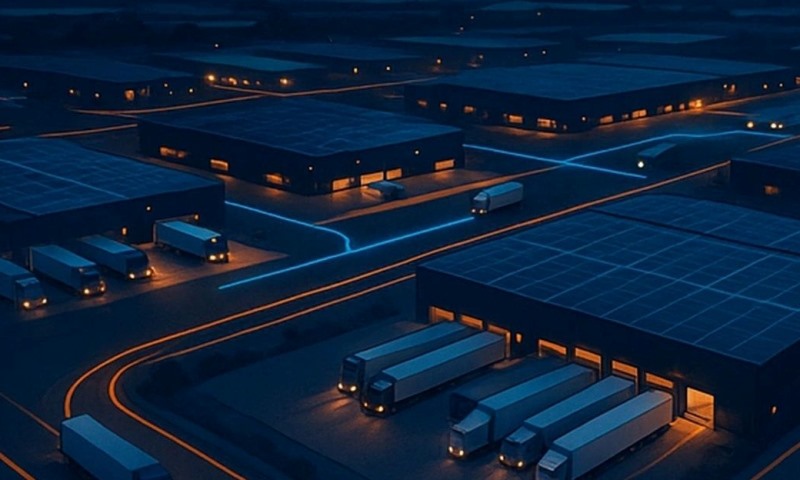
A major logistics infrastructure initiative is underway in Navi Mumbai, with authorities advancing the first phase of a large integrated logistics hub designed to strengthen supply chains across the Mumbai metropolitan region.
The project has entered its initial rollout stage, with bids invited for a nearly 180-acre land parcel that will anchor warehousing and distribution activities. The development will follow a hybrid model, where public agencies will create core infrastructure—such as internal roads, drainage, and utilities—while private players invest in and operate logistics facilities.
Urban development experts see the project as part of a broader shift in India’s logistics landscape, moving away from fragmented warehousing toward organised, integrated hubs. These facilities aim to streamline cargo movement, cut transit times, and improve inventory efficiency, particularly amid rapid growth in industrial production and e-commerce.
The master plan includes multiple logistics zones within a unified layout, supported by wide internal corridors for heavy vehicle movement. Strategically located in the Mumbai metropolitan region, the park offers proximity to key transport infrastructure, including ports, highways, and the upcoming Navi Mumbai International Airport—a factor expected to enhance its role as a logistics gateway for western India.
From an economic standpoint, the development is likely to attract investment in warehousing, cold storage, and distribution, while generating employment across both skilled and semi-skilled segments. Industry analysts note that such integrated logistics parks could help reduce India’s relatively high logistics costs over time, improving overall competitiveness.
However, experts caution that large-scale logistics expansion must be balanced with sustainable planning. Key recommendations include incorporating energy-efficient infrastructure, rainwater harvesting systems, and green buffers to minimise environmental impact and reduce strain on local ecosystems.
Aligned with state industrial policy, the project reflects a coordinated push to modernise logistics infrastructure through private sector participation. The success of this first phase will be critical in determining the pace and scale of future expansion, positioning Navi Mumbai at the forefront of India’s evolving logistics ecosystem.