
Major shippers have stopped using the vital maritime route due to the ongoing Houthi attacks.
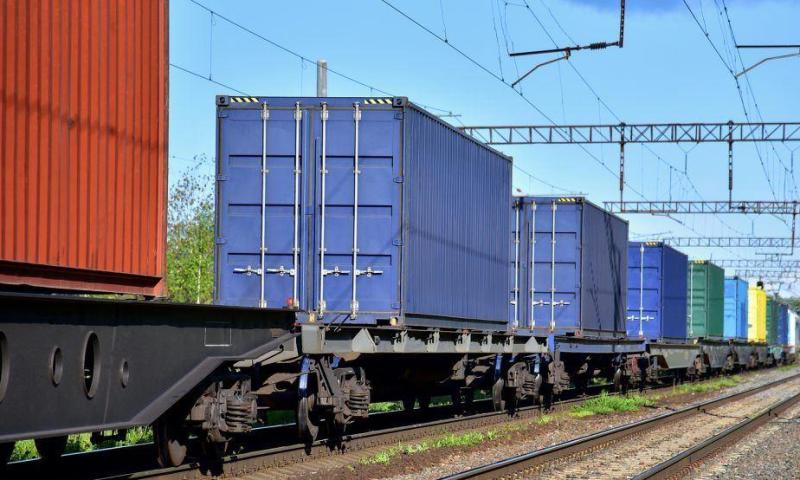
The Houthi rebel attacks on vessels in the Red Sea have spurred burgeoning interest in alternative routes such as the China-Europe rail route that runs through Russia’s Far East.
Companies that organize the shipment of goods have registered a sharp increase in enquiries and bookings for the route, according to the article. Transit via rail is attractive to shippers because it is cheaper than air freight and quicker than using ocean transportation.
RailGate Europe, which transports goods including furniture, toys, clothes, and automotive parts from China through Russia to European countries, said that the transit time is “significantly better” than via ocean. The journey takes between 14 and 25 days depending on its origin and destination, according to the company’s chief business development officer, Julija Sciglaite.
However, some firms have been raising concerns about sending goods via rail through Russia. “Since [the] war in Ukraine started, many companies were afraid to deliver their cargos via Russia as train passes [through] part of Russian territory,” Sciglaite said.
“Since [the] war started, [the] number of bookings decreased significantly via Russia, but within [the] last year, this route is recovering due to good transit time and prices,” she said, adding that demand for rail transit had spiked since the Houthis started attacking vessels in the Red Sea.
Bookings for the China-Europe rail route were up 37% over the past four weeks, according to Igor Tambaca, the managing director of the Dutch logistics company Rail Bridge Cargo. “The demand for rail exploded,” he told the outlet, adding this is due to the Red Sea disruption and the Lunar New Year.
According to the report, the EU permits sanctioned goods to be moved via rail through Russia, whereas road transport of sanctioned products is banned.