
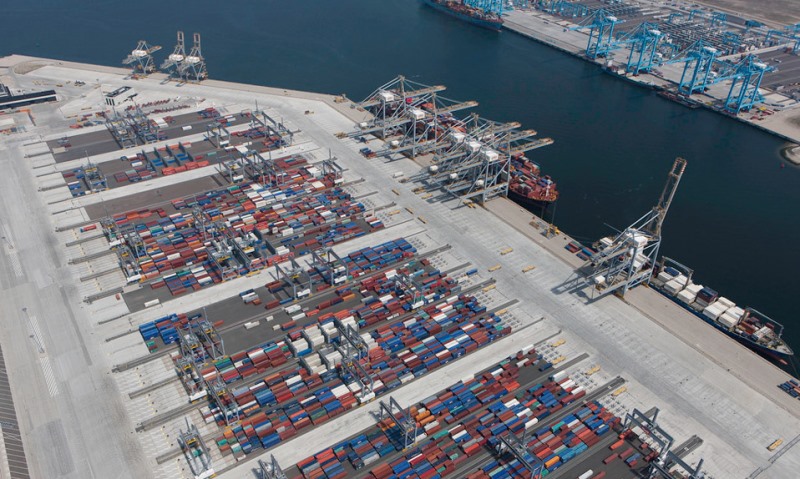
The Port of Rotterdam has conducted its first open-water trial of an unmanned surface vessel (USV).
This marks the first time such a vessel has been allowed to operate in Dutch waters outside a controlled test environment.
Under Dutch Inland Navigation Police Regulations (Binnenvaartpolitiereglement, BPR), vessels are typically required to have a crew onboard.
However, following a legal amendment in April 2025, exemptions may now be granted under specific conditions.
The Port of Rotterdam’s Harbour Master, René de Vries, approved such an exemption for this trial — the first of its kind in the Netherlands.
The trial featured the V3000, a three-metre autonomous vessel developed by Demcon Unmanned Systems, operating under supervision from a conventional, crewed support vessel.
The V3000 conducted hydrographic survey tasks, including depth measurements, in areas that are often difficult for larger crewed vessels to access.
The initiative forms part of the Port of Rotterdam Authority’s broader fleet renewal strategy.
Over the next 12 years, the authority plans to replace its aging vessels, aiming to improve operational efficiency, sustainability, and standardisation.
According to the Port Authority, USVs could complement existing survey operations, particularly in large areas like Maasvlakte 2.
The trial also examined the potential impacts of autonomous vessels on current operations and workforce roles.
Data from the trial is now being evaluated by the Port Authority and Demcon Unmanned Systems.
The V3000 is equipped with autonomous navigation, safety systems, and sensors designed for accurate and low-disturbance hydrographic measurements.
Demcon Unmanned Systems, based in the Port of Scheveningen, develops autonomous maritime technology, including both hardware and software for unmanned operations.
Recently, the Port of Rotterdam Authority and the Sea Ranger Service formalised a three-year collaboration aimed at providing young people with maritime work experience while supporting sustainability initiatives in the port.