
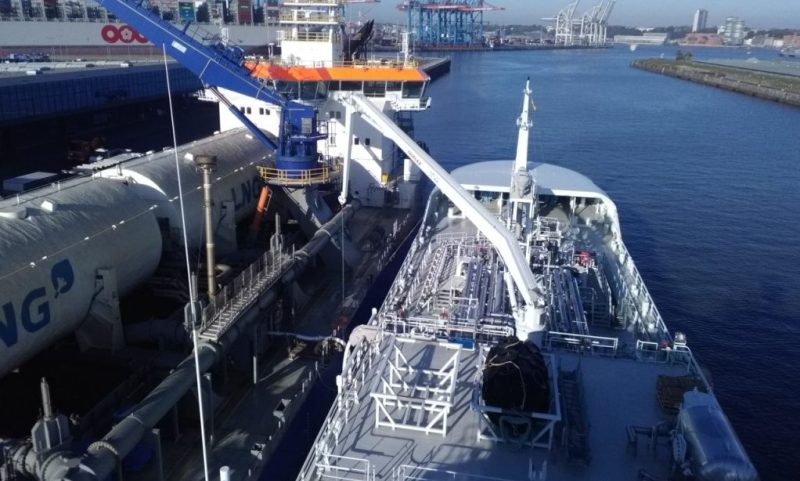
European shipowners welcomed the inclusion of clean fuels for shipping, including advanced biofuels and e-fuels, in the list of net-zero technologies adopted yesterday at the European Parliament under the Net-Zero Industry Act.
The new law introduces a benchmark for the European Commission and EU member states to match 40% of the deployment needs for clean fuels for shipping with production capacity.
“This is a vital step to ensure that clean fuels for shipping are made available in the market at an affordable price, as a prerequisite for shipping to meet its target under the Fuel EU Maritime Regulation,” stated a release from the European Community Shipowners’ Associations (ECSA).
“Matching European fuel industrial capacity with the EU targets under the FuelEU Maritime is essential,” said Sotiris Raptis, ECSA’s secretary-general, adding that his team would work closely with the authorities to ensure that the 40% benchmark is translated into immediate action.
By 2030 shipping will be fighting many other industries for every prized drop of the myriad new green fuels.
Increasing regulatory pressure to decarbonise, including stricter targets set by the International Maritime Organization (IMO) last July, means the shipping industry now needs to achieve a 20% reduction in emissions by 2030 and net-zero emissions by or around 2050. To meet the anticipated demand of 17m tonnes of oil equivalent annually by 2030, the maritime sector needs to access a 30-40% of the projected worldwide carbon-neutral fuel supply, according to a report by DNV.