
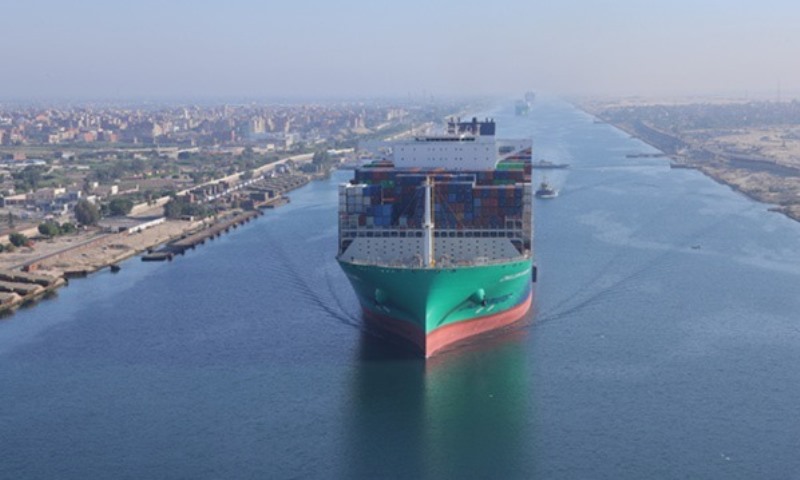
The Suez Canal has recorded a significant recovery in maritime traffic and revenues in November 2026, with revenue more than doubling year-on-year as major international shipping lines gradually resume transits through the Red Sea waterway.
According to figures released by the Suez Canal Authority (SCA) on 24 November, the canal generated US$593 million in revenue from the beginning of November, marking a 101.2% increase compared with US$295 million during the corresponding period in 2025.
Vessel transits during the reporting period reached 1,194, up 34.8% from 886 vessels a year earlier. The combined net tonnage also increased substantially to 72 million tonnes, compared with 37 million tonnes in the same period last year.
The figures were announced by SCA Chairman Ossama Rabiee during a visit to the South Red Sea Shipyard in Safaga, where he reviewed progress on the authority’s ongoing shipbuilding and marine construction projects.
Major Shipping Lines Gradually Return
The improvement in canal traffic reflects the gradual restoration of services by major international shipping companies through the Red Sea and Suez Canal following the prolonged disruption to shipping in the region.
Recent developments include the return of additional Maersk and Hapag-Lloyd services under their Gemini Cooperation, alongside renewed Suez Canal transits by other major container shipping operators.
Hapag-Lloyd’s activity provides another indication of the recovery. According to the SCA, 30 vessels operated by the German shipping line transited the canal between August and 23 November 2026, accounting for a combined net tonnage of 4.8 million tonnes.
While the latest figures indicate a strong improvement in overall traffic, the SCA has not released a detailed breakdown of container ship transits or revenue contributions by vessel category.
SCA Targets Higher Shipbuilding Capacity and Tugboat Exports
Alongside the recovery in canal operations, the SCA is stepping up its shipbuilding ambitions, with plans to double the production capacity of its affiliated shipyards and companies.
The authority aims to reach a production target of two marine vessels per month and plans to build 50 tugboats for export, strengthening Egypt’s position in the specialised marine construction sector.
During the Safaga visit, sea trials commenced for two AZM-class tugboats, each with a bollard pull capacity of 90 tonnes. The vessels represent the seventh and eighth units in an initial programme of ten tugboats.
The shipyard also launched two REZK-class deep-sea fishing vessels, REZK 4 and REZK 5. Each vessel measures 50 metres in length and is being constructed under the supervision of classification society RINA.
The SCA further indicated that two additional AZM-class tugboats are expected to be delivered to Italy’s NERI Group, while discussions are underway on a separate contract for four more tugboats.
The expansion programme is part of Egypt’s broader effort to strengthen domestic shipbuilding, develop marine engineering expertise and increase exports of specialised vessels.
The latest revenue and traffic figures offer a positive indication of the Suez Canal’s recovery, although the sustainability of the rebound will depend on the continued return of major shipping lines and improved stability across the Red Sea region.