
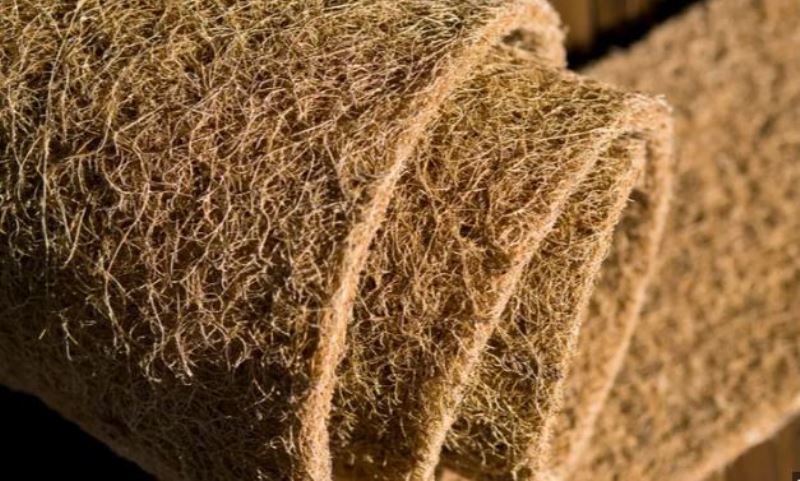
Tamil Nadu’s coir industry is facing a severe crisis as rising shipping costs and an export slowdown have forced manufacturers to cut production, lay off workers and divert labour to agricultural activities. Industry representatives estimate that nearly 60% of workers have either lost their jobs or shifted to farm work, while unsold coir products worth ₹5,000 crore have accumulated across the state.
The crisis has severely affected rural livelihoods, particularly those of women employed in coir fibre processing units. P Revathy, who worked for six years at a coir fibre unit in Thottipalayam in Karur district, lost her job five months ago and is now seeking work at coconut farms. With her husband also employed as a daily-wage worker, she has been borrowing money to meet household expenses.
Transport operators dependent on the coir industry have also suffered. Lorry owners who transport coconut husks from farms to processing units in Pollachi report a prolonged absence of orders, leaving vehicles idle and businesses under pressure.
Tamil Nadu accounts for around one-third of India’s coir production, with Coimbatore and Pollachi serving as major manufacturing centres. Nearly 70% of the state’s production is exported, making the industry particularly vulnerable to disruptions in international trade and rising freight rates.
According to P Poochamy of the Federation of Tamil Nadu State Coir Associations, shipping costs have increased sharply as vessels take longer routes to avoid the Strait of Hormuz amid the West Asia conflict. Freight charges for a 40-foot high-cube container from India to Boston have reportedly risen from $3,100 in March to $12,800, making several export orders commercially unviable.
Manufacturers of coir grow bags and coco peat blocks have reported a steep decline in business. V Selvakumar, an exporter serving markets including Russia, Australia and the United States, said his monthly turnover, which previously exceeded ₹10 lakh, had become negligible since June. Of his 70 workers, 40 were laid off and subsequently employed on his coconut farm at reduced salaries.
The slowdown has also reduced electricity consumption at manufacturing units as production declines. G Sivam Muruganandham, president of the Coimbatore District Coir and Allied Products Manufacturing Association, said the monthly electricity bill of a typical unit had fallen from around ₹2 lakh before February to ₹50,000, reflecting the scale of the contraction.
Exports of coir fibre and coir chips to China have faced additional challenges due to quality-related certification issues. Meanwhile, the impact of El Niño and changes in greenhouse cultivation practices in Europe have further weakened prospects for an early recovery in overseas demand. Some manufacturers have, however, received orders from Maharashtra, where the government is promoting polyhouse cultivation.
The industry has urged the Central and Tamil Nadu governments to introduce measures to revive demand and support affected manufacturers and workers. Key proposals include interest-free loan schemes, restoration of the 4.5% incentive under the Remission of Duties and Taxes on Exported Products (RoDTEP) scheme, and promotion of coir mattresses for government hospitals and hostels.
Manufacturers have also called for training and awareness programmes through the state agriculture department to encourage coco peat-based polyhouse cultivation.
Industry representatives believe that expanding domestic applications for coir products, alongside financial assistance and export support, could help clear accumulated inventories, restore production and protect employment in one of Tamil Nadu’s important rural industries.