
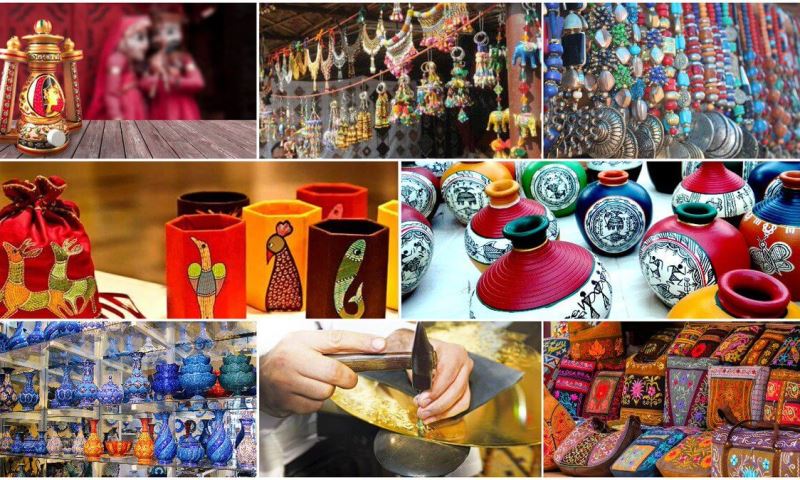
Surat, Kutch, Ahmedabad, and Rajkot are bracing for heavy losses as the Trump administration’s 50% tariff on Indian exports comes into effect, casting uncertainty over Gujarat’s ₹29,000 crore chaniya choli and handicraft market. Traders fear the move could sharply impact sales during the crucial Navratri season.
Chaniya cholis, beadwork, applique, hand embroidery, and machine embroidery products—all under the textiles and apparels category—are directly exposed to the new tariffs. Exporters warn that orders could shrink by 50-70%, threatening the livelihoods of thousands of artisan families across Kutch and Saurashtra who rely heavily on Navratri exports.
India’s handloom exports to the US, including carpets, shawls, and bed covers, are valued at ₹4,200 crore annually, while handicraft exports reached ₹9,576–13,860 crore in 2022-23. With the US accounting for 38% of India’s handicraft exports, Gujarat’s textile and handicraft industry, which ships ₹29,400 crore worth of products to the US annually, is particularly vulnerable.
Artisans and traders are urging the government to announce at least a 10% subsidy to cushion the impact. “We prepare for months to meet Navratri demand in the US market. If tariffs stay, we may incur losses as high as 70%,” said a leading handloom trader. While India’s domestic market could absorb some of the shock in the long term, exporters warn that the immediate effect of the tariff is creating fear and uncertainty across Gujarat’s textile hubs.