
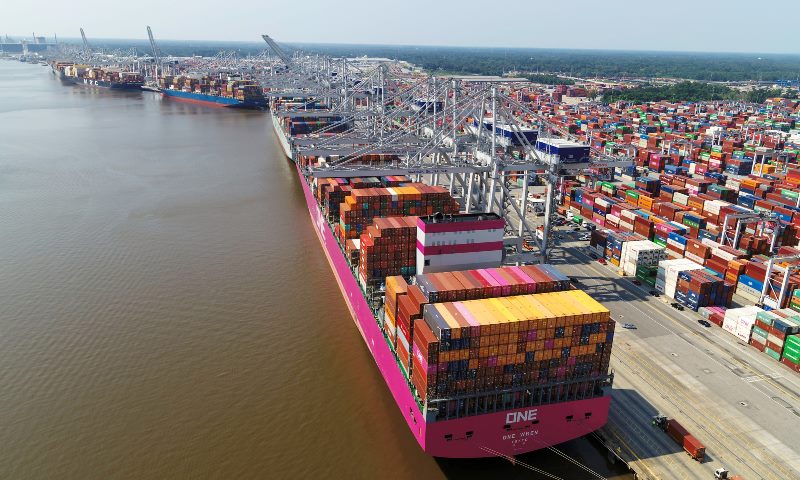
Several major US container gateways are experiencing vessel delays and localised congestion, although the disruption remains concentrated at specific terminals rather than representing a widespread slowdown across the national port network.
At the Port of Los Angeles–Long Beach complex, vessel delays have been reported at Pier 400, while terminal gates across the wider San Pedro Bay port complex continue to operate according to published schedules.
Elsewhere, Charleston is experiencing vessel delays of up to around 18 hours, while Los Angeles has reported delays of roughly 12 hours, according to the latest carrier operational information. Other major gateways, including New York, Miami, Mobile, New Orleans, Seattle and Tacoma, have been operating without significant vessel queues.
The uneven pattern suggests that current disruption is being driven largely by terminal-specific bottlenecks and vessel bunching, rather than a broad-based congestion crisis across US container ports.
For carriers and cargo owners, even relatively short vessel delays can create knock-on effects for berth schedules, container availability and inland transportation. Shippers are therefore being advised to monitor individual terminal conditions closely when planning cargo movements through affected gateways.
The latest developments come as US container trade continues to face an uncertain operating environment, with import demand, vessel deployment and global supply-chain disruptions influencing port performance.