
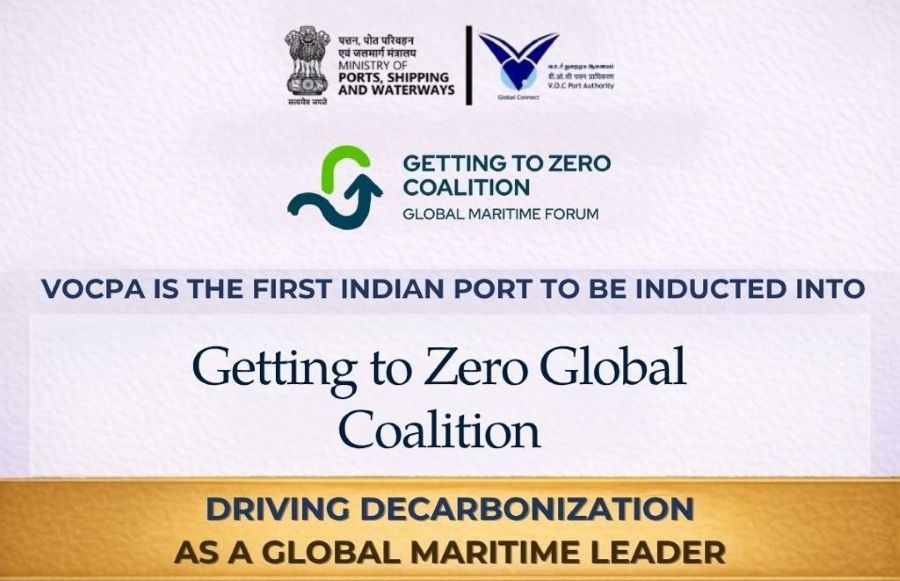
India has taken a significant step forward in its maritime sustainability journey, with V.O. Chidambaranar Port Authority (VoCPA) becoming the first Indian port to join the Getting to Zero Coalition.
The coalition, managed by the Global Maritime Forum and originally founded in collaboration with the World Economic Forum and Friends of Ocean Action, is a leading global platform aimed at accelerating the transition to zero-emission shipping by 2050.
VoCPA’s inclusion places India firmly within a network of more than 200 stakeholders spanning the maritime value chain, including shipowners, ports, energy companies, and policymakers. The coalition works through coordinated innovation, regulatory alignment, and cross-industry collaboration to drive the adoption of cleaner fuels and sustainable shipping technologies.
This milestone aligns with India’s broader push to build green, future-ready maritime infrastructure while reducing the carbon footprint of its ports and shipping sector. By joining the coalition, VoCPA signals India’s intent to actively contribute to shaping global decarbonization pathways and advancing low-carbon port operations.
The move is expected to enhance India’s global maritime standing while supporting national and international climate commitments, reinforcing the country’s role in the transition toward a more sustainable shipping industry.