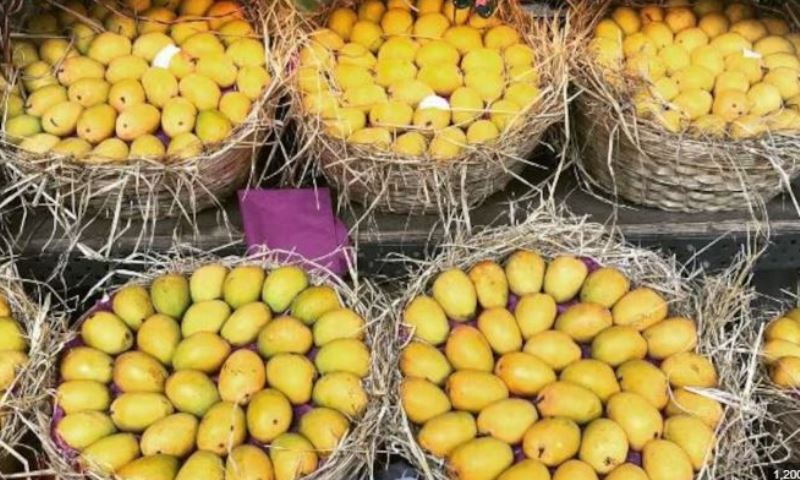
India has successfully exported 12.5 tonnes of Dashehari and Langra mangoes from Amroha, Uttar Pradesh, to Dubai by sea, marking a significant milestone in fresh fruit exports and demonstrating the commercial viability of a new sea-freight export protocol developed jointly by the ICAR–Central Institute for Subtropical Horticulture (ICAR-CISH) and the Agricultural and Processed Food Products Export Development Authority (APEDA).
The consignment, shipped in a 40-foot refrigerated container, was exported by Shehnaz Export, Amroha, in association with Attashi Global, to Lulu Group, one of the Gulf region’s leading retail chains. APEDA provided logistical support, while ICAR-CISH offered technical guidance throughout the process.
The mangoes were harvested on June 22 and treated with ICAR-CISH’s METWASH shelf-life enhancement technology before being scientifically graded, packed at the Amroha Pack House and transported under an uninterrupted cold chain.
Despite delays caused by adverse weather associated with a Western Disturbance, the shipment reached Dubai on July 17 after a 25-day harvest-to-market journey. Nearly 90 per cent of the mangoes arrived in marketable condition, validating the effectiveness of the extended sea-route export protocol.
According to the Ministry of Agriculture and Farmers Welfare, the successful trial demonstrates that premium Indian mangoes can now be exported economically by sea without compromising quality, offering a cost-effective alternative to air freight.
The reduced logistics costs also benefited farmers, with exporters able to pay growers an additional ₹15–20 per kg compared with conventional export channels, improving farm incomes while enhancing the competitiveness of Indian mangoes in international markets.
The shipment is the first successful commercial sea export of Dashehari and Langra mangoes from Uttar Pradesh to Dubai under a 25-day transit period. The government expects the protocol to encourage wider adoption of sea freight for mango exports from Uttar Pradesh and other producing states, lowering export costs, boosting overseas shipments and creating better market opportunities for Indian mango growers.
