
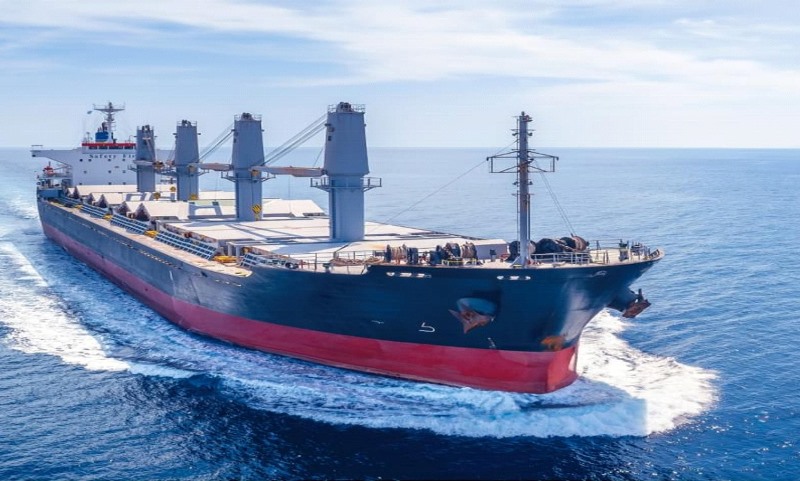
The International Association of Dry Cargo Shipowners (INTERCARGO) has called on governments, international organisations and parties involved in armed conflicts to strengthen protection for seafarers and civilian merchant vessels amid a sharp rise in attacks on commercial shipping across key global trade routes.
In a statement issued on July 29, INTERCARGO warned of a “noticeable shift towards the direct targeting of commercial shipping,” stressing that merchant seafarers are civilians performing an essential role in sustaining global trade and should never be treated as military targets.
“Merchant vessels not involved in hostilities have long been recognised as deserving protection, and attacks on them put the lives of ordinary working people at risk for reasons that have nothing to do with their jobs,” the association said.
INTERCARGO urged governments and international institutions to take immediate and concrete measures to halt attacks on civilian merchant ships and ensure the safety of crews operating in conflict-affected waters.
“Our members continue to move the food, fertiliser and goods that people and economies depend on. Every seafarer deserves to do that job safely and to return home,” the association added.
Black Sea Remains High-Risk Zone
The appeal comes amid continued security threats in the Black Sea, where commercial shipping remains vulnerable to ongoing hostilities.
On July 29, the Indian Embassy in Ukraine confirmed it was closely monitoring the situation involving the merchant vessel MV Amir1, carrying 13 Indian seafarers among its 15-member crew, after reports that the ship was exposed to repeated drone and missile attacks near Ukraine’s Black Sea coast.
The Forward Seamen’s Union of India (FSUI) described conditions for the crew at Ukraine’s Port of Chornomorsk as “terrible and life-threatening” due to sustained missile and drone strikes in the area.
The latest incident follows a series of attacks on merchant vessels in the region. On July 19, a Russian missile struck a cargo ship carrying corn near the Ukrainian port of Odesa, killing 10 people. A week later, a Guinea-Bissau-flagged cargo vessel reportedly sank off Odesa after Ukrainian authorities said it had been hit during the same round of attacks.
The International Maritime Organization (IMO) has also condemned attacks on civilian merchant ships in the Black Sea, reiterating that seafarers should never become casualties of armed conflicts. India and Greece have advised vessels operating in the region to exercise extreme caution.
Red Sea Security Concerns Persist
The Red Sea continues to face significant security challenges following repeated attacks linked to the regional conflict.
On July 20, Yemen’s Houthi movement announced a maritime embargo on Saudi Arabia-linked shipping, warning that vessels connected to Saudi ports, companies or commercial interests could become targets.
Days later, on July 28, the Houthis claimed responsibility for attacking the Saudi-linked oil tanker NCC Ghazal with ballistic missiles, forcing the vessel to reverse course. The group alleged the tanker had violated its declared shipping ban.
Earlier, on July 22, the tanker Encelia was struck by an unidentified projectile approximately 70 nautical miles southwest of Al Shuqaiq, Saudi Arabia. Another tanker, Layla, was also reportedly targeted, although the incident remains unconfirmed.
Strait of Hormuz Under Continued Threat
The Strait of Hormuz, one of the world’s most critical energy shipping corridors, has also witnessed sustained attacks on commercial vessels.
According to maritime security data, 62 confirmed incidents had been recorded in the waterway as of July 27, resulting in the deaths of 17 seafarers, injuries to many others, damage to dozens of vessels and multiple ship abandonments.
Among the latest incidents, the LPG tanker Lavine was damaged in the Strait of Hormuz on July 24 while reportedly operating under a false Mozambique flag.
Earlier, on July 20, the vessel Kaifan was attacked about eight nautical miles northeast of Limah, Oman. The crew abandoned the vessel following the attack, and two seafarers sustained injuries.
One of the deadliest incidents occurred on July 14, when two UAE-linked vessels came under attack approximately 13 nautical miles off the coast of Oman. The crude oil tanker Al Bahyah was damaged, leaving one seafarer dead and three injured, while the VLCC Mombasa B also sustained damage, forcing its crew to abandon the vessel. Eleven seafarers were reported injured.
With attacks spreading across the Black Sea, Red Sea and Strait of Hormuz, INTERCARGO warned that the safety of merchant seafarers is facing unprecedented challenges and renewed its call for coordinated international action to protect civilian shipping and preserve the uninterrupted flow of global trade.