
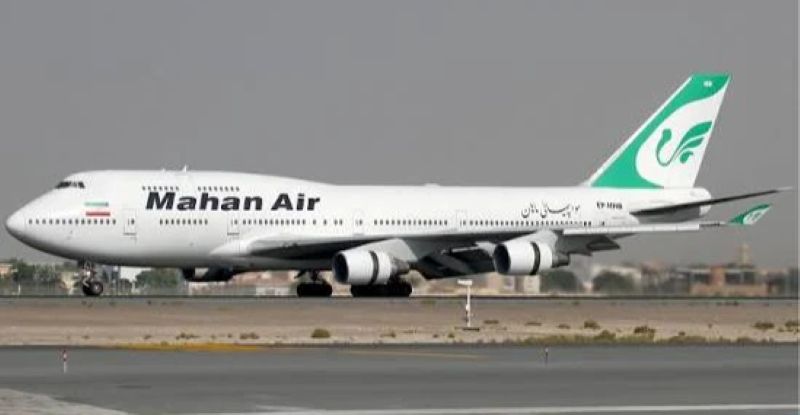
The United States has imposed fresh sanctions on six entities and individuals across China, India and Russia for allegedly providing logistics, financial and commercial support to Iran’s Mahan Air, a carrier accused by Washington of assisting the Islamic Revolutionary Guard Corps (IRGC).
Announcing the measures, the US Department of the Treasury’s Office of Foreign Assets Control (OFAC) said the sanctions target companies and individuals involved in facilitating Mahan Air’s international operations and supporting Iran’s military-linked activities.
Among those designated is Skiez Travels and Logistics, an India-based company accused of acting as Mahan Air’s general sales agent (GSA) in India. Also sanctioned is Air Cargo Pro of Russia, which served as the airline’s general sales agent in Russia.
In China, the Treasury sanctioned Shanghai Wings International Logistics and its Managing Director Tang Xin, who also serves as Mahan Air’s general sales agent coordinator in China. Tang Xin is also the Executive Director and 50% owner of Shanghai Elite International Travel, another sanctioned company representing Mahan Air in China.
According to the Treasury Department, Tang Xin coordinated the transfer of electronic equipment from China to Iran in support of Mahan Air’s operations.
The sanctions also target DadeNegar Startup Studio, which US authorities describe as an IRGC-affiliated front company. The Treasury alleged that the company operated a website to collect information on the locations of American and Israeli military assets and received requests to facilitate strikes against US targets in the Middle East in coordination with the IRGC.
US Treasury Secretary Scott Bessent said the latest measures are aimed at disrupting networks that enable Iran’s military-linked organisations to operate internationally.
“Those who provide financial services, logistics, or commercial support to the IRGC or Mahan Air are helping sustain a terrorist enterprise,” Bessent said.
The sanctions freeze any US-based assets of the designated entities and generally prohibit US persons from engaging in transactions with them. They also expose foreign companies dealing with the sanctioned entities to the risk of secondary sanctions under US regulations.