
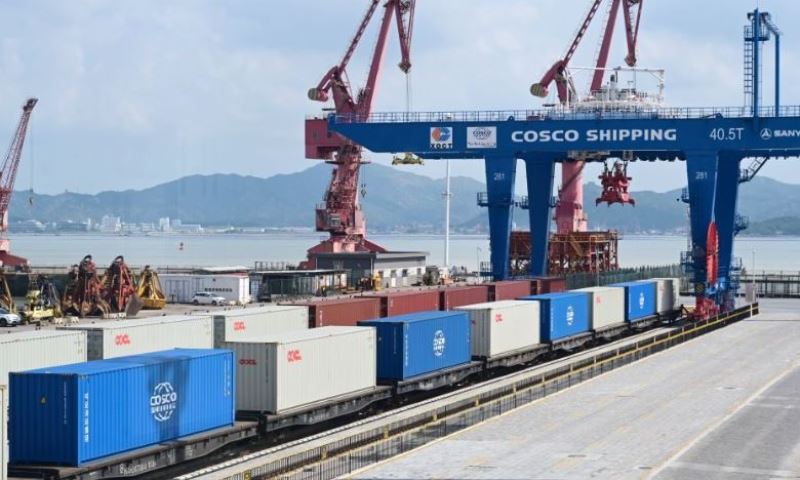
COSCO Shipping has inaugurated a new automated rail connection at Xiamen, marking another step in the company’s efforts to enhance intermodal logistics and improve cargo movement between the port and inland markets through smart transportation solutions.
The automated rail link integrates advanced digital technologies with rail freight operations, enabling more efficient handling of containers and seamless coordination between rail terminals, port facilities, and logistics centers. The system is designed to reduce cargo transfer times, improve operational accuracy, and optimize the flow of freight across the supply chain.
The new rail connection strengthens Xiamen’s role as a key logistics gateway for southeastern China by expanding the port’s ability to connect maritime shipping with inland rail networks. Exporters and importers are expected to benefit from faster cargo movement, reduced handling costs, and improved reliability for both domestic and international shipments.
The project forms part of COSCO Shipping’s broader strategy to accelerate digital transformation across its global logistics operations. Automation, real-time cargo tracking, intelligent scheduling, and data-driven terminal management are expected to enhance productivity while supporting higher cargo volumes.
Industry observers believe the automated rail link will improve multimodal transport efficiency by encouraging greater use of rail for inland freight distribution. Increased rail connectivity is also expected to help reduce road congestion, lower transport-related emissions, and support more sustainable logistics operations.
The launch reflects China’s continued investment in modern logistics infrastructure aimed at strengthening supply chain resilience and improving trade connectivity. As cargo volumes continue to grow, integrated smart transport systems such as the Xiamen automated rail link are expected to play an increasingly important role in supporting efficient port operations and regional economic development.